Showing posts with label off grid living. Show all posts

The Man Who Lives Without Money


Think you couldn’t live without money? Irishman Mark Boyle challenged this notion and here’s how he finds life with no financial income, bank balance, and no spending.
“If someone told me seven years ago, in my final year of a business and economics degree, that I’d now be living without money, I’d have probably choked on my microwaved ready meal.” According to Boyle, the plan back then was to ‘get a good job’, make as much money as possible, and buy the stuff that would show society he was successful.
Like most individuals raised in a consumer-driven society, he never second guessed those goals. For a while he had a fantastic job managing a big organic food company and even had a yacht in the harbor. If it hadn’t have been for the chance purchase of a video called Gandhi, he’d still be pursuing the same life. “I’d still be doing it today. Instead, for the last fifteen months, I haven’t spent or received a single penny. Zilch”.
The change in life path came one evening on the yacht while philosophizing with a friend over a glass of Merlot. “Whilst I had been significantly influenced by Mahatma’s quote “be the change you want to see in the world”, I had no idea what that change was up until then.”
The two friends began talking about all the major issues in the world – environmental destruction, resource wars, factory farms, sweatshop labor – and wondered which of the issues they could best devote their time to. Mark didn’t feel he could really make any difference, however “being two small drops in a highly polluted ocean”.
That evening, though, a revelation came through: “These issues weren’t as unrelated as I had previously thought – they had a common root cause. I believe the fact that we no longer see the direct repercussions our purchases have on the people, environment, and animals they affect is the factor that unites these problems.”
Boyle believes that the degrees of separation between the consumer and the consumed have increased so much that it now means most people are completely unaware of the levels of destruction and suffering embodied in the ‘stuff’ they buy.
It can be agreed that few people actually want to cause suffering to others; most just don’t have any idea that they directly are. The tool that has enabled this separation is money, especially in its globalized format.
“If we grew our own food, we wouldn’t waste a third of it today” is one of Mark’s examples as to why it’s important a reconnection with natural/source living is established. “If we made our own tables and chairs, we wouldn’t throw them out the moment we changed the interior décor. If we had to clean our own water, we probably wouldn’t shit in it”.
The above arguments all honestly assess the undervalue most objects now have. With convenience at our fingertips, most don’t consider where their trash product or unwanted items go.
Deciding to be the change, this then spurred Mark to fully dive into his new viewpoint and give up money, which he only planned on doing for a year. “I made a list of the basics I’d need to survive. I adore food, so it was at the top. There are four legs to the food-for-free table: foraging wild food, growing your own, bartering and using waste grub, of which there are far more”.
On his first day, he fed 150 people a three-course meal with waste and foraged food. For himself, however, he ate his own crops and waste only made up about 5% of his diet. “I cooked outside – rain or shine – on a rocket stove”.
The next concern was shelter. He found himself a caravan from Freecycle, parked it on an organic farm he volunteered with, and renovated it out to be off the electricity grid. I’d use wood I either coppiced or scavenged to heat my humble abode in a wood burner made from an old gas bottle, and I had a compost loo to make ‘humanure’ for my veggies”. Up front and to the point, Boyle clearly understood the necessity of using every available resource to be most sustainable.
“I bathed in a river, and for toothpaste I used washed up cuttlefish bone with wild fennel seeds, an oddity for a vegan. For loo I’d relieve the local newsagent of its papers (Once I wiped my arse with a story about myself); it wasn’t double quilted but it quickly became normal”. For transportation, Mark used his bike and trailer, using the 55 km commute to the city as an alternative solution for the gym. Beeswax candles served as his lighting.
Humorously inspiring to some, deluded and anti-capitalist to others, Mark had this to say about his radical lifestyle: “Many people label me as anti-capitalist. Whilst I do believe capitalism is fundamentally flawed, requiring infinite growth on a finite planet, I am not anti anything.” More than anything, Boyle claims to be pro-nature, pro-community, and pro-happiness. How often is that a city dweller’s life philosophy?
“And that’s the thing I don’t get – if all this consumerism and environmental destruction brought happiness, it would make some sense. But all the key indicators of unhappiness – depression, crime, mental illness, obesity, suicide and so on are on the increase.” More money, it seems, does not equate to more happiness. (See Documentary: Happy)
Another positive effect of Mark’s unique lifestyle is the joy he has created for himself. “Ironically, I have found this year to be the happiest of my life. I’ve more friends in my community than ever, I haven’t been ill since I began, and I’ve never been fitter. I’ve found that friendship, not money, is real security. That most western poverty is spiritual, and that independence is really interdependent.”
Mark’s example certainly stands as inspiration for those seeking freedom from the fast-paced modern age; most alternative media sources would agree that the more one reconnects to nature, the better their mental, physical, and spiritual health is. However, could everyone live like this? According to Mark, no.
“It would be a catastrophe, we are too addicted to both it and cheap energy, and have managed to build an entire global infrastructure around the abundance of both.”
The prospect of gradually transitioning to re-localized, small communities is a possibility, though. With greener energy sources and healthier communities being implemented at a growing rate, natural living is already a reality, but may be made much more mainstream in the future to come.
“For over 90 percent of our time on the planet, a period when we lived much more ecologically, we lived without money. Now we are the only species to use it, probably because we are the species most out of touch with nature.”
Asked what was missing from his old world of lucre and business, Mark replied “Stress. Traffic-jams. Bank statements. Utility bills. Oh yeah, and the odd pint of organic ale with my mates down at the local”.
It just goes to show, if you are passionate about anything, you can be that change you’d like to see in the world.


Thanks for taking the time to read this article. If you found this information helpful, please share it with your friends and family. Your support in our endeavor of sharing free information would be much appreciated.

Follow us on Facebook to stay updated with what's going Viral in the Alternative News scene. https://www.facebook.com/ViralAlternativeNews

This article (The Man Who Lives Without Money) is free and open source. You have permission to republish this article under a Creative Commons license with attribution to the author and TrueActivist.com.

Adorable $250 Cob House Created by a Retired Art Teacher


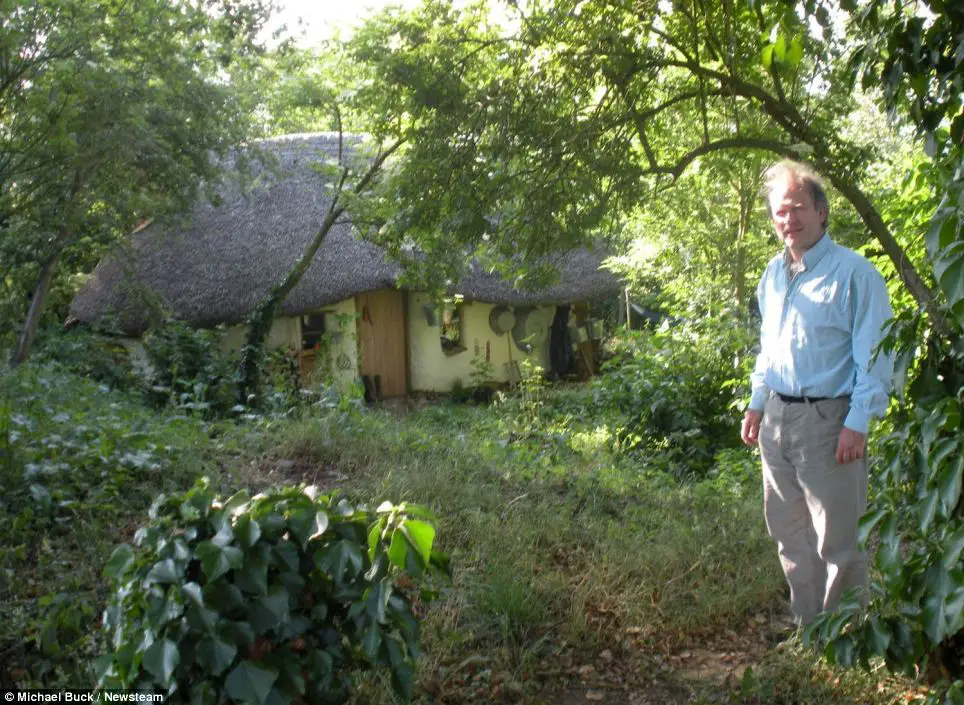
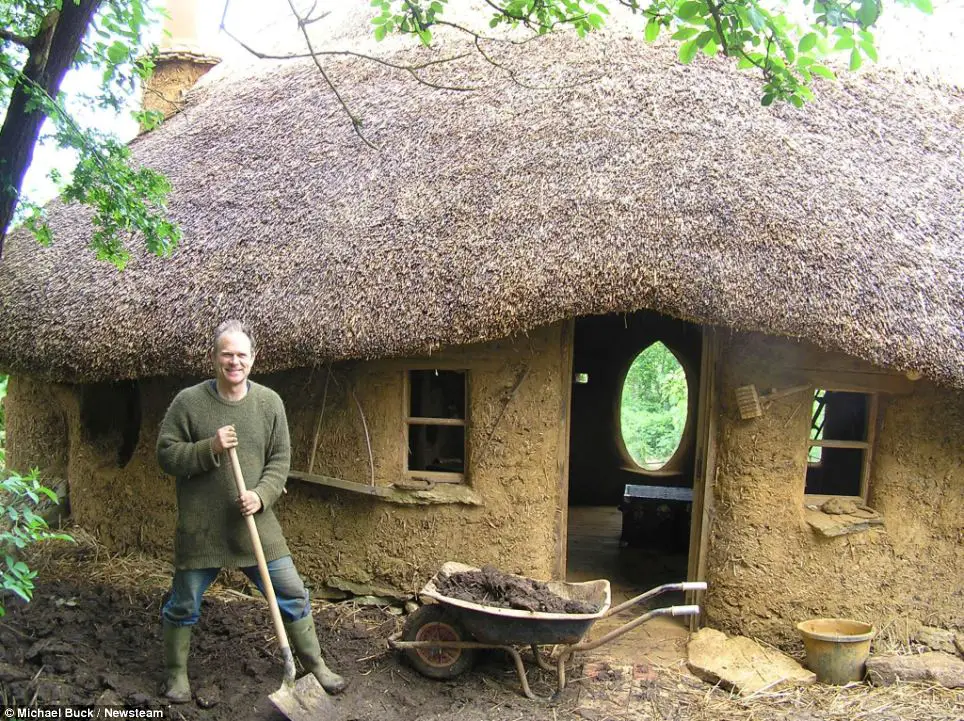
Mr Michael Buck, a 59-year-old retired teacher of art from Oxfordshire, England decided to build an adorable cob house out in his garden for $250 (£150).
This home almost looks like a hobbit home or a country cottage straight out of Middle Earth. The story behind the project is almost just as magical.
article-2513154-19A18DB700000578-273_964x705
Making sure to use only reclaimed or natural materials and with no gas, water or electrical mains Buck has been able to keep things simple while saving a lot of money.
article-2513154-19A18D9900000578-260_964x593


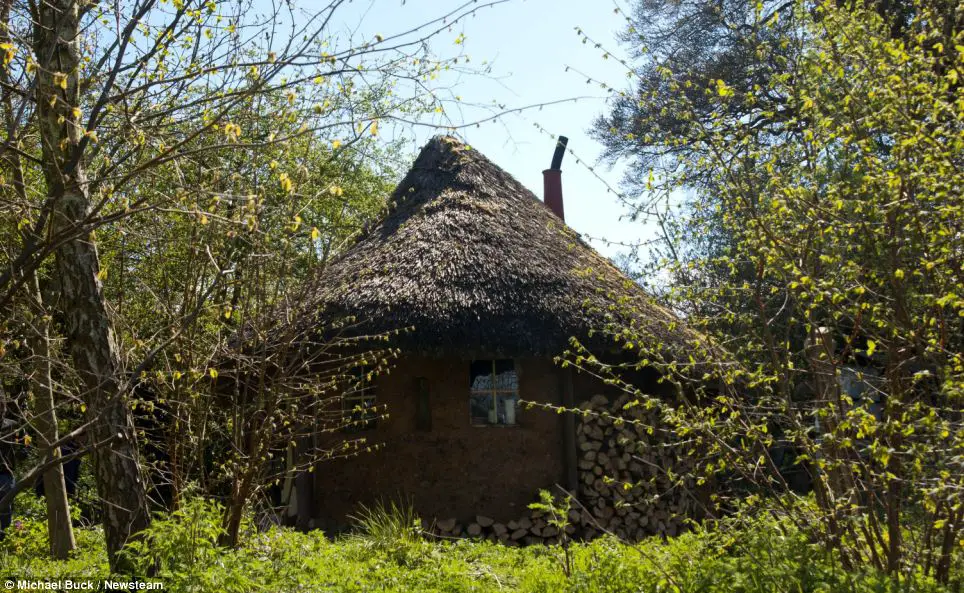
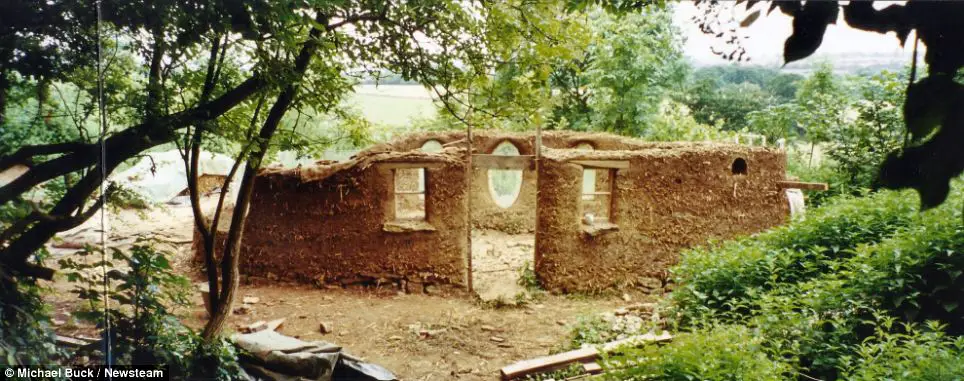
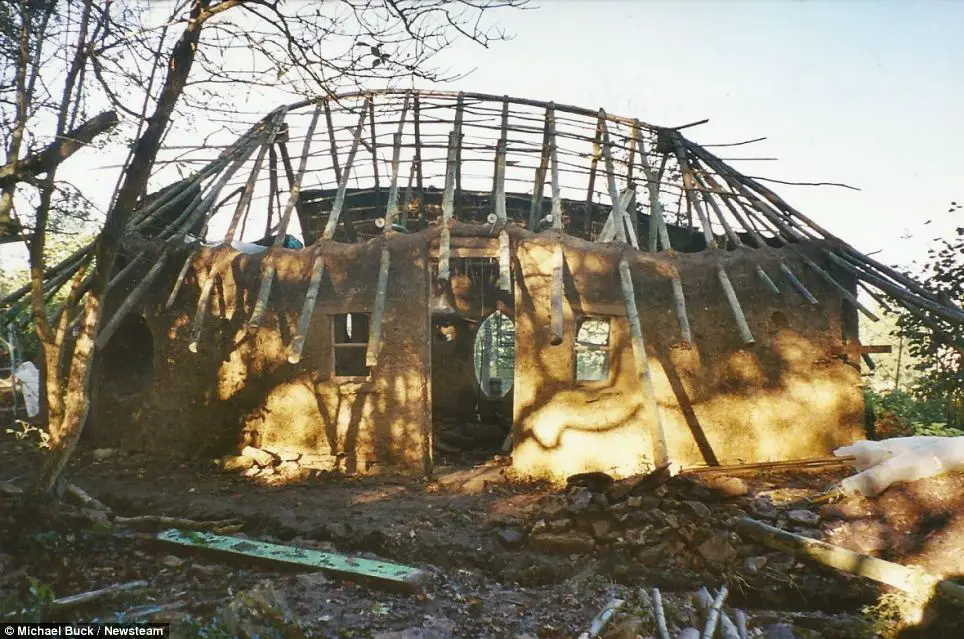
Michael Buck spent 8 months creating the home using an ancient technique known as cob.
article-2513154-19A18EEF00000578-396_964x641
Cob is where you making a mixture of clay, straw, sand, earth, and water.  After reading a book, Buck taught himself how to use the method.
article-2513154-19A18E5B00000578-39_964x723
He built the entirely handmade home without a single power tool!
article-2513154-19A18EE700000578-184_964x381
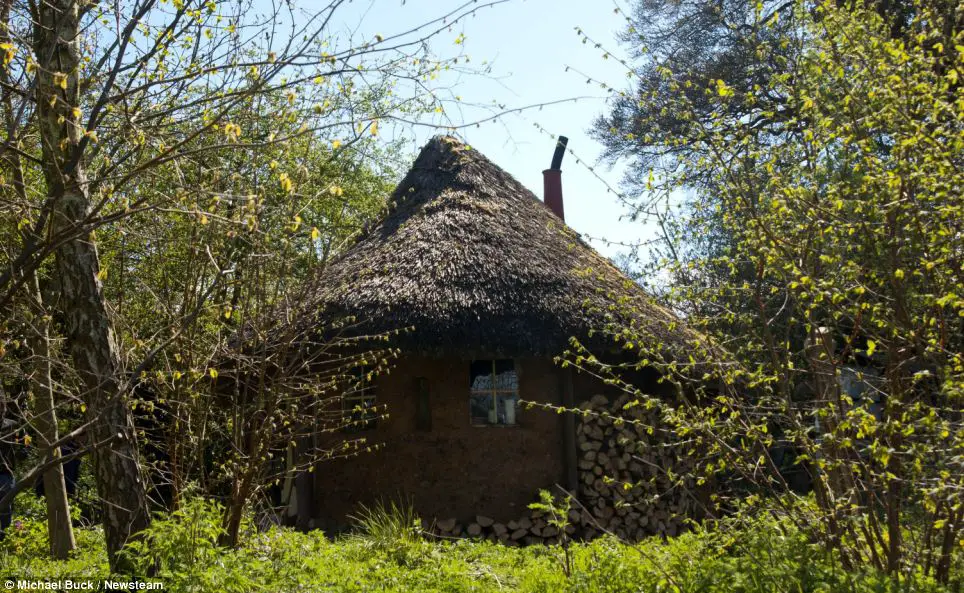
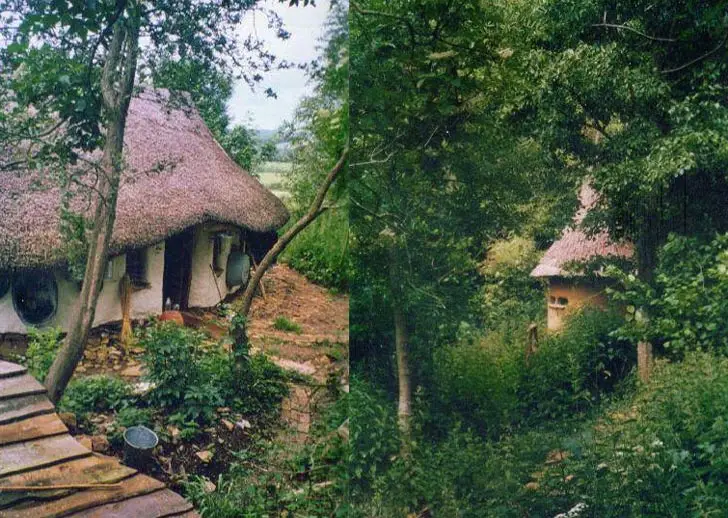
Mr Michael Buck said he wanted to make sure that the house would ‘fit in with the landscape rather than intrude upon it’.
article-2513154-19A18EF700000578-585_964x639
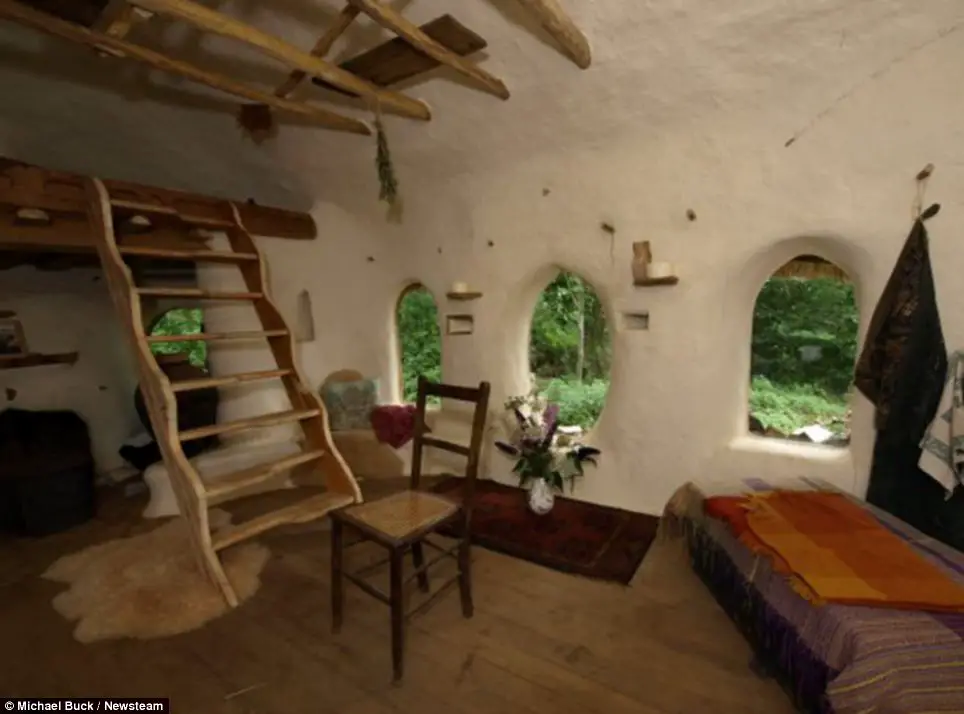
On the inside, the floorboards were given to him from a neighbour’s ship.
article-2513154-19A18F1700000578-349_470x496
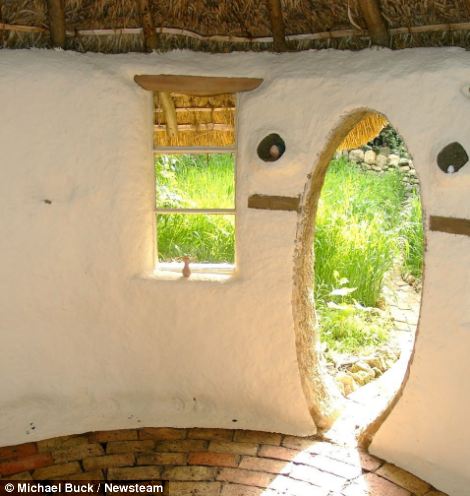
He also used the windscreen from an old lorry to make several of the windows for the home.
article-2513154-19A18D6300000578-637_964x632
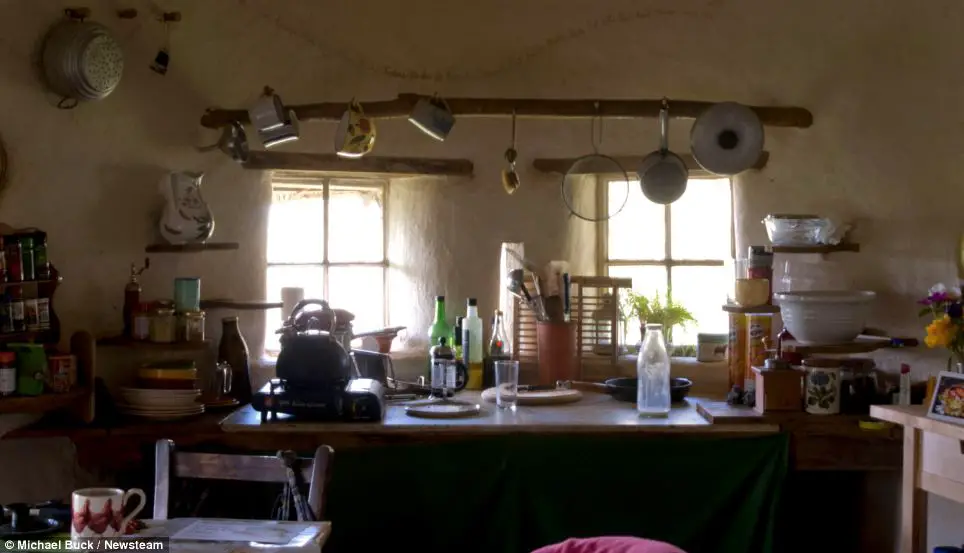
The little cottage comes with its own dining and kitchen area as well as an adorable bunk bed to maximise space.
article-2513154-19A18F2200000578-573_964x714
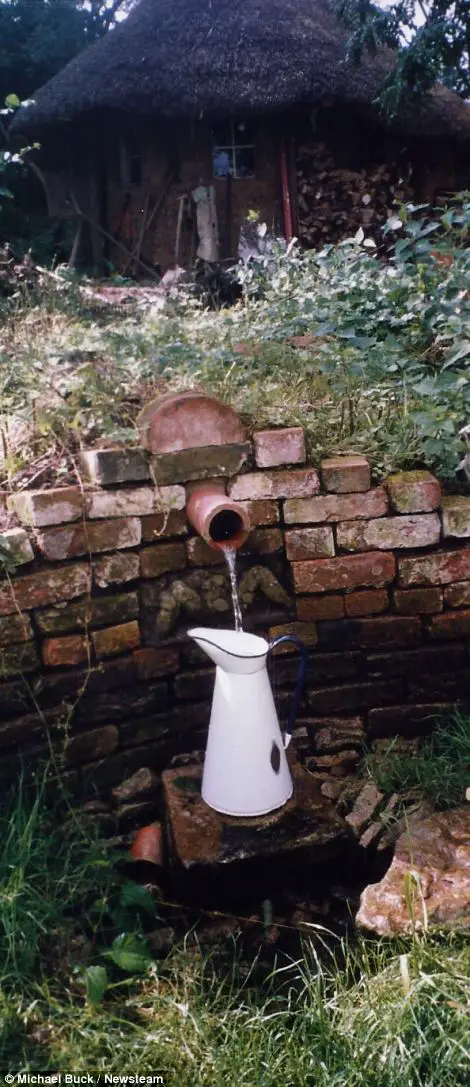
The cottage is simple and doesn’t have any electricity, however, it does have a natural stream of running water that comes from a nearby spring.
article-2513154-19A18DFF00000578-990_964x553
The walls are painted with a plant resin and chalk mixture.
article-2513154-19A18E5F00000578-562_470x1087
Mr. Buck has decided to rent out the little home to a woman who works at a nearby dairy farm.  She trades cream and milk for her lodging.  Cooking is done on a little gas stove in the kitchenette or on the wood burner.
article-2513154-19A18D9900000578-260_964x593-1
 ‘I wanted to show that houses don’t have to cost anything. We live in a society where we spend our lives paying our mortgages, which many people don’t enjoy.’ Said Mr Michael Buck.
Mr. Buck planned to originally build the house for no money. But some miscalculations in the amount of straw that he would need in order to build the house led him to buy more.
michael-buck-cob-house-oxfordshire-england-5-1
Also, he needed to buy some nails to keep the thatch attached to the home. Some of his friends also pitching in and helped build the cottage.
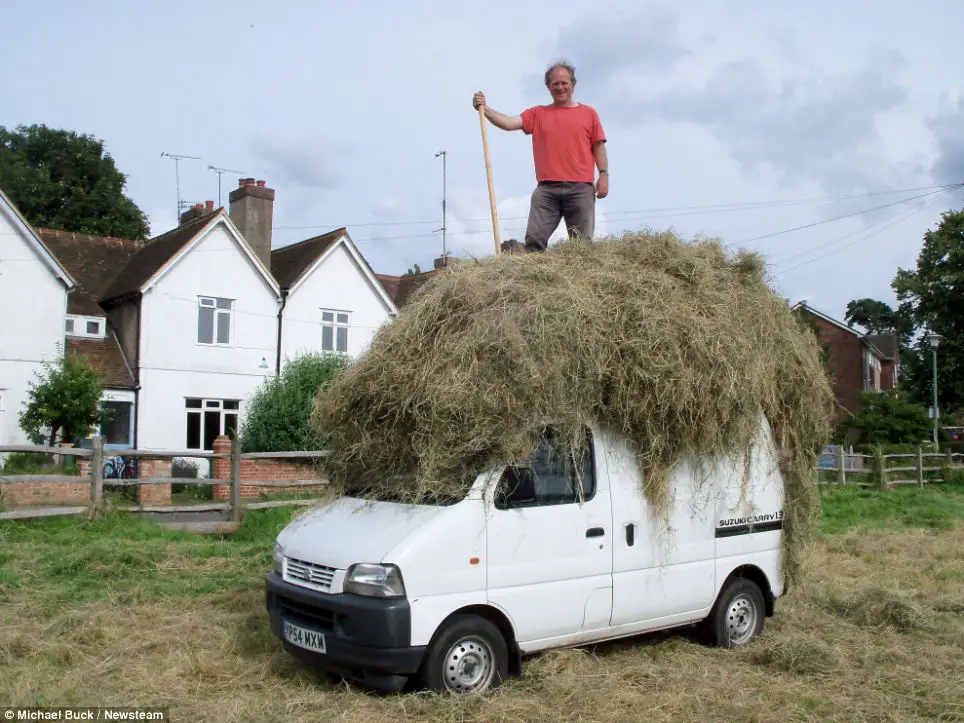
They all added their names to the inside of the wall with their 3 cows Crystal, Mist and Marigold. After all it was their dung that was used to make the plaster!
michael-buck-cob-house-oxfordshire-england-4
Because he classified the building as a summer house he didn’t need permission from the city in order to build the unique structure.
michael-buck-cob-house-oxfordshire-england-6a
This home has sure come a long way from its original plans which were drawn on the back of an envelope by Mr. Buck.  I guess this goes to show that a lot of love and a little creativity can go a long way.
article-2513154-19A18DD000000578-576_964x721


Thanks for taking the time to read this article. If you found this information helpful, please share it with your friends and family. Your support in our endeavor of sharing free information would be much appreciated.

Follow us on Facebook to stay updated with what's going Viral in the Alternative News scene. https://www.facebook.com/ViralAlternativeNews

Sources: 

‘Camping’ on Your Own Land is Now Illegal — Govt Waging War on Off-Grid Living


Costilla County, CO — Across the U.S., local zoning officials are making it increasingly difficult for people to go off the grid, in some instances threatening people with jail time for collecting rainwater or not hooking into local utilities.

As zoning laws have increasingly targeted the off-grid lifestyle, many have moved to the Southwestern U.S. as an escape from overzealous zoning officials.

In Costilla County, Colorado, there has been a major influx of off-grid residents to the San Luis Valley. The combination of lax zoning regulations, cheap property, and an already thriving community of self-reliant off-grid homesteaders has led to many new residents.

The off-grid lifestyle, enjoyed by an estimated 800 people, is now being threatened as county officials have recently made moves to essentially regulate and license the lifestyle into oblivion.

Tensions boiled over during a county commissioners’ meeting in San Louis, Colorado, devolving into a shouting match between homesteaders and police. One of the major points of contention is the county’s attempt to ban camping on your own property, in an effort to force the off-grid homesteaders back onto the grid.

“We are residents who have come to live off the grid. It’s all our land.” … “These are harsh economic times. We have nowhere to go,” twenty-year resident Paul Skinner said.

“We’ve been regulated out of life,” homesteader Robin Rutan told Colorado Public Radio. “I came here because I couldn’t live by the codes [in other regions].”

The county, which requires residents to have a camping permit to live in an RV, “small house” or other camp style home, has started to simply refuse the renewal of these permits.

This is obviously a major problem for homesteaders, who often live in such accommodations while building their permanent residents.

“They started enforcing the changes before they were actually made,” resident Chloe Everhart said.

Everhart said she performed due diligence prior to buying her land, with one of the most important aspects of the plan being a 90-day camping permit. Without a 90-day permit, camping on residential plots is only allowed for 14 days per every three months.

But just as Everhart was arriving, the board of commissioners instructed the planning and zoning commission to no longer issue camping permits.

In spite of her best efforts, Everhart is now an outlaw.

County land use administrator Matt Valdez disputes the claims that the county is trying to regulate people’s lifestyles out of existence. He says that his office has discretion to deny camping permits under existing code and claims that too many new residents were habitually renewing permits meant to be temporary.

“We’re not trying to drive people off their property,” Valdez said.

Valdez said he simply wants to make sure already established rules are followed for aesthetic and safety reasons.

The vilification of people who choose to live an alternative lifestyle is extremely commonplace in modern America.


While there may be legitimate issues that need to be addressed, people have a right to use land that they own in the manner they see fit. To use the technicalities of the law to essentially evict people from land they own reeks of tyrannical overreach and oppression of personal liberty.


Thanks for taking the time to read this article. If you found this information helpful, please share it with your friends and family. Your support in our endeavor of sharing free information would be much appreciated.

Follow us on Facebook to stay updated with what's going Viral in the Alternative News scene. https://www.facebook.com/ViralAlternativeNews

http://thefreethoughtproject.com/camping-land-illegal-homesteading-regulated-existence/

Jay Syrmopoulos is an investigative journalist, free thinker, researcher, and ardent opponent of authoritarianism. He is currently a graduate student at University of Denver pursuing a masters in Global Affairs. Jay’s work has been published on Ben Swann’s Truth in Media, Truth-Out, AlterNet, InfoWars, MintPressNews and many other sites. You can follow him on Twitter @sirmetropolis, on Facebook at Sir Metropolis and now on tsu

Want To Find (Free) Land And Become An Eco Warrior? Let This Guy Inspire You!


He lives in a tiny home on someone else's land, with no money and few possessions...and he's never been happier


Many of us dream of a simpler life: giving up the expenses of running a house, finding some land, and living in a small, eco-friendly space in harmony with nature. Many of us also invent excuses not to do so: ‘I don’t have a plot with planning permission’, or ‘I don’t have any cash to get the ball rolling’ being two of the most typical.

Rob Greenfield‘s entire existence should make us think twice about this defeatist attitude. The self-styled celebrity off-gridder, whose mission to live without money has been featured in numerous magazines and TV shows, is an inspiration to us all- and not just his tips on activism, his awesome bamboo bicycle or his passion for dumpster diving. Rob’s tiny home (or should we say teeny home) is just five feet wide and ten feet long, but it looks so cosy and functional. The activist picked it up on Craigslist for just $950, and as for the problem of no land to park it up on- well, no problem. Rob figured maybe someone in the San Diego area would let him use some of their land in exchange for garden maintenance and other odd jobs, plus free food from his garden. He wrote an ad asking for this mutually beneficial agreement, and he found the perfect place with ease. Just like he dreamed of, Rob is now living off-grid, and in the city too!


Rob calls his home the ‘Teeny Greeny’. Because it’s so tiny, Rob admits he only uses it for sleeping and ‘cuddling’, but he has built an outdoor bathroom (with a composting toilet and sink), in addition to an outdoor kitchen comprising stove, sink and storage unit. Rob has fitted solar panels on the roof of his unusual house. He grows all his own food and lives 100% money (and debt) free, taking what he needs only from nature and using skill-swapping as an alternative currency to get everything he needs. He built some gutters on his neighbor’s house so they can both benefit from harvesting rainwater, and tries to eat fresh food so he doesn’t need to use a refrigerator. Now, he lives work-free, stress-free, money-free and worry-free. Rob’s story is a reminder that we can all choose this lifestyle, and taking the plunge is easier than you might think.

This video is jam-packed with very useful advice on gardening, making compost from human waste (aka ‘humanure’) and Rob also offers his thoughts on why showers are really not necessary…


Thanks for taking the time to read this article. If you found this information helpful, please share it with your friends and family. Your support in our endeavor of sharing free information would be much appreciated.

Follow us on Facebook to stay updated with what's going Viral in the Alternative News scene. https://www.facebook.com/ViralAlternativeNews

This article (Want To Find (Free) Land And Become An Eco Warrior? Let This Guy Inspire You!) is free and open source. You have permission to republish this article under a Creative Commons license with attribution to the author and TrueActivist.com.

This garden grows 20k lbs of fish and 70k vegetables without pesticides, soil, or even water.


This garden has no need for pesticides, soil, or even water to grow food. In addition, it can hold 20,000 lbs of fish and grow 70,000 vegetables!


As TrueActivist has written about before, a staggering amount of food is wasted on a global scale. Believe it or not, 1/3 of all food produced in the world is thrown away – even though 795 million people go to bed hungry every evening.

At present, it’s not really an issue of growing enough food (though large-scale agricultural methods are definitely doing more damage to the environment than good, and will need to be remedied soon), but disbursing it and lessening waste, without letting economic greed get in the way.


Thanks to a revolutionary aquaponic system, there is definitely hope.

As shared in the video above, a 5 foot x 40-foot aquaponic unit may be the solution to feeding the increasing global population. The unit is capable of feeding 8 adults all year long “forever,” with less than an hour a day needed for maintenance. 

Amazingly, this garden – which can be utilized year-round – has no need for pesticides, soil, or even water to grow the food. And, it can hold 20,000 lbs of fish and grow 70,000 vegetables!
This technology has definite potential to transform the food industry and positively impact lives.

What is Aquaponics? 

Aquaponics is a symbiotic farming model that combines two different techniques to provide water and nutrients to plants in a unique way. As the name implies, the method merges aquaculture with a hydroponic system. 
Aquaculture is the technique of raising aquatic animals in tanks while hydroponics is a system of growing plants inside of water.

Both systems work so well together because the fish actually provide nutrients and nitrogen-fixing bacteria for the hydroponic system, which helps the plants to grow. 

In this revolutionary system, plants grow faster and healthier than most traditional farming methods. And did we mention the technology is easy to maintain and can feed eight adults for a year, ‘forever’?

If every household doesn’t have one of these systems in the future, then every community will need to manage at least one aquaponic farm to provide biodynamic, locally grown food. This is the technology needed to sustain the ever-increasing global population.

Not to mention, if people play a role in growing and maintaining their own food, they will likely waste less. Of course, food companies will always strive to prepare ready-made and packaged meals, but self-subsistence is a necessary course for Earth’s inhabitants if the planet is to be lived on sustainably and waste – in all ways – be reduced.
As Upriser shares, this technique is not a new invention, but a method of growing food used by cultures such as the Aztecs and earlier civilization in American and throughout Asia.
However, the importance of this modern technology cannot be overstated. Learn more at PortableFarms(.com).


What are your thoughts? Comment below and share this article.


Thanks for taking the time to read this article. If you found this information helpful, please share it with your friends and family. Your support in our endeavor of sharing free information would be much appreciated
. Follow us on Facebook to stay updated with what's going Viral in the Alternative News scene. https://www.facebook.com/ViralAlternativeNews


This article (This Revolutionary Unit Produces Enough Fish And Vegetables To Feed An Adult For One Year!) is free and open source. You have permission to republish this article under a Creative Commons license with attribution to the author and TrueActivist.com