Showing posts with label Sugar. Show all posts

Does Sugar Promote Heart Disease & Cancer?


By Dr. Mercola
More than 1,660,290 new cancer cases are projected to be diagnosed in the US this year, and an estimated 580,350 Americans will die from the disease.1Another 600,000 Americans die of heart disease each year.2 At present, heart disease is the leading cause of death among both sexes. 
Despite massive technological advances over the past half-century, Western medicine is still at a loss for how to rein in the prevalence of these top two killers.
It's become increasingly clear that many of the conventional strategies, from diagnosis to treatment, are riddled with flawed assumptions and approaches that, in many cases, do more harm than good. 
What's worse, virtually none of the conventional strategies actually address the root cause of the problem, a flawed diet high in sugars and processed foods. 
In fact, conventional dietary recommendations for the prevention of heart disease are diametrically opposed to what you actually need for optimal heart health! For over 60 years, saturated fats have been blamed for heart disease, resulting in the promulgation of a dangerous low-fat, high-sugar diet. 
In reality, a diet that promotes health is high in healthful fats and very, very low in sugar and non-vegetable carbohydrates... Research coming out of some of America's most respected institutions now confirms that sugar is a primary dietary factor driving chronic disease development. 
Sugar, and fructose in particular, has been implicated as a culprit in the development of both heart disease and cancer, and having this information puts youin the driver's seat when it comes to prevention.

How Much Sugar Is in Your Diet?

Ever since I started this Web site back in 1997, I've been warning about the dangers of high sugar consumption. It's important to realize that even if you don't add sugar to your foods, hidden sugar, typically in the form of high fructose corn syrup (HFCS), is in virtually all processed foods, from yogurts and sauces to breads and sodas. 
Many favorite staples are also grain-based, such as bagels, pancakes, and breakfast cereals. All those grains are also quickly turned into sugar in your body, adding to your sugar burden.
Clinical trials have shown that those who consume HFCS tend to develop higher risk factors for cardiovascular disease within as little as two weeks, so if I had to pick out the worst culprit among sugars, it would be fructose. 
Other studies indicate that if you limit your sugar, no matter what form you get it in, you effectively decrease your chances of developing cancer—including breast and colon cancers.

Soda Drinkers Have Increased Cancer Risk

According to recent research,3, 4 older women who drink a lot of soda or other sugary beverages may be at significantly increased risk for endometrial cancer—an estrogen-dependent type of cancer that affects the lining of a woman's uterus. 
The study included data for more than 23,000 postmenopausal women who were followed for 14 years. 
Women who had the highest intake of sugary beverages had a whopping 78 percent higher risk for endometrial cancer, and the risk appeared to be dose dependent; rising right along with consumption. Study author Maki Inoue-Choi was not surprised by the results, and neither am I. 
"Other studies have shown increasing consumption of sugar-sweetened beverages has paralleled the increase in obesity. Obese women tend to have higher levels of estrogens and insulin than women of normal weight, [and] increased levels of estrogens and insulin are established risk factors for endometrial cancer," she said.5
Previous research has also shown that dietary fructose can promote cancergrowth in a number of different ways, including:
  • Altered cellular metabolism 
  • Increased reactive oxygen species (free radicals) 
  • DNA damage 
  • Inflammation 

Fructose Promotes Cancer Cell Proliferation

Studies have shown that different sugars are metabolized using different metabolic pathways, and this is of MAJOR consequence when it comes to feeding cancer and making it proliferate. Three years ago, researchers published findings showing that fructose is readily used by cancer cells to increase their proliferation.6 Cancer cells did not respond to glucose in the same manner. 
In this case, the cancer cells used were pancreatic cancer, which is typically regarded as the most deadly and universally rapid-killing form of cancer. According to the authors:
"Traditionally, glucose and fructose have been considered as interchangeable monosaccharide substrates that are similarly metabolized, and little attention has been given to sugars other than glucose. However, fructose intake has increased dramatically in recent decades and cellular uptake of glucose and fructose uses distinct transporters. 
Here, we report that fructose provides an alternative substrate to induce pancreatic cancer cell proliferation. Importantly, fructose and glucose metabolism are quite different; in comparison with glucose, fructose... is preferentially metabolized via the nonoxidative pentose phosphate pathway to synthesize nucleic acids and increase uric acid production. 
These findings show that cancer cells can readily metabolize fructose to increase proliferation. They have major significance for cancer patients given dietary refined fructose consumption, and indicate that efforts to reduce refined fructose intake or inhibit fructose-mediated actions may disrupt cancer growth." [Emphasis mine]
The study confirms the old adage that sugar feeds cancer because they found that tumor cells do thrive on sugar (glucose). However, the cells used fructosefor cell division, speeding up the growth and spread of the cancer. This difference is clearly of major consequence, and should be carefully considered by anyone who is currently undergoing cancer treatment or seeking to prevent cancer.

This does not mean you should avoid fruits, the benefits of most fruits outweigh any concerns to fructose. I would suggest to not juice your fruits and to eat them whole, and also realize we have bred many of these fruits to a very high level of fructose. Fruits today are many times sweeter than they were historically, and should be consumed in moderation. The real problem is the high fructose corn syrup that is added to practically every processed food and drink you see.

Remember: Exercise Is Another Potent Ally Against Cancer and Heart Disease

Controlling your blood-glucose and insulin levels—through diet, along with a comprehensive exercise program—can be one of the most crucial components to a cancer recovery program. These factors are also crucial in order to prevent cancer in the first place. Diet and exercise—particularly high intensity interval training—are also the dynamic duo that will help you stave off heart disease. 
In fact, a recent meta-analysis that reviewed 305 randomized controlled trials found no statistically detectable differences between exercise and medications for heart disease, including statins and beta blockers. (Previous research has also shown that exercise alone can reduce your risk of cardiovascular disease by a factor of three,7 which isn't too shabby.) Exercise is in fact so potent, the researchers suggested that drug companies ought to be required to include it for comparison when conducting clinical trials for new drugs. As reported by Bloomberg:8
"The analysis adds to evidence showing the benefit of non-medical approaches to disease through behavior and lifestyle changes... 'In cases where drug options provide only modest benefit, patients deserve to understand the relative impact that physical activity might have on their condition,' Naci and Ioannidis said in the published paper. In the meantime, 'exercise interventions should therefore be considered as a viable alternative to, or, alongside, drug therapy.'" 
In a nutshell, being a healthy weight and exercising regularly creates a healthy feedback loop that optimizes and helps maintain insulin and leptin receptor sensitivity. And, as I've mentioned before, insulin and leptin resistance—primarily driven by excessive consumption of refined sugar and grains along with lack of exercise—are the underlying factors of nearly all chronic disease


NEW MIDDLE AD FOR ARTICLES WITH ENOUGH TEXT, otherwise delete this ad code if there isn't a couple paragraphs worth of text. add this section after the first paragraph or 2, or the middle of the text.


Connecting the Dots: Fructose—Uric Acid—Cancer and Chronic Disease Risk

The theory that sugar feeds cancer was actually born nearly 80 years ago. Shockingly, most conventional cancer programs STILL do not adequately address diet and the need to avoid sugars. The 1931 Nobel laureate in medicine, German Otto Warburg, Ph.D., first discovered that cancer cells have a fundamentally different energy metabolism compared to healthy cells. Malignant tumors tend to use a process where glucose is used as a fuel by the cancer cells, creating lactic acid as a byproduct.9
The large amount of lactic acid produced by this fermentation of glucose from cancer cells is then transported to your liver. This conversion of glucose to lactic acid generates a lower, more acidic pH in cancerous tissues as well as overall physical fatigue from lactic acid buildup.10, 11
This is a very inefficient pathway for energy metabolism, which extracts only about five percent of the available energy in your food supply. In simplistic terms, the cancer is "wasting" energy, which leads you to become both tired and undernourished, and as the vicious cycle continues, will lead to the body wasting so many cancer patients experience. Additionally, carbohydrates from glucose and sucrose significantly decrease the capacity of neutrophils to do their job. Neutrophils are a type of white blood cell that helps cells to envelop and destroy invaders, such as cancer.
While all forms of sugar are detrimental to health in general and promote cancer, but in slightly different ways and to a different extent, fructose clearly seems to be one of the overall most harmful. As mentioned above, fructose metabolism leads to increased uric acid production along with cancer cell proliferation.12 Again, ONLY fructose (not glucose) drives up your uric acid levels. 
Now, the connection between fructose, uric acid, and insulin resistance is so clear that your uric acid level can actually be used as a marker for toxicity from fructose. What this means is that if your uric acid levels are high, you're at increased risk of all the health hazards associated with fructose consumption—including both heart disease and cancer. Subsequently, you'd be well advised to reduce your fructose intake. For more information about this, please see my previous interview with Dr. Richard Johnson, who is an expert on this topic. Two key recommendations however are:
  • Keep your uric acid level below 4 mg/dl for men and 3.5 mg/dl for women, and 
  • As a standard recommendation, I strongly advise keeping your TOTAL fructose consumption below 25 grams per day

Reeling in Your Fructose Consumption May Be the Most Important Lifestyle Change You Can Make

Dr. Johnson has written one of the best books on the market on the health dangers of fructose, called The Sugar Fix, which explains how fructose causes high blood pressure, heart disease, obesity, diabetes, and kidney disease. It's also safe to say that many cancers are also on the list of diseases that are directly linked to excessive fructose consumption. In addition to the studies already mentioned, fructose has also been found to promote metastasis in breast cancer,13 and shows genotoxic effects on the colon in animal research.14
Fructose also promotes a condition called intracranial atherosclerosis15—a narrowing and hardening of the arteries in your skull—and contrary to popular belief, it is the sugar/fructose in your diet that increases your risk for heart disease, NOT saturated animal fats.
At the basic dietary level, the prevention strategies for heart disease and cancer are identical. First and foremost, you need to address your insulin and leptin resistance, which is the result of eating a diet too high in sugars and grains—again, not fat, with the exception of trans fats from partially hydrogenated vegetable oils, which have been linked to increased heart disease risk, even in small amounts. To safely and effectively reverse insulin and leptin resistance, you need to:
  • Avoid sugar, processed fructose, grains if you are insulin and leptin resistant, and processed foods 
  • Eat a healthful diet of whole foods, ideally organic, and replace the grain carbs with: 
    • Large amounts of vegetables 
    • Low-to-moderate amount of high-quality protein (think organically raised, pastured animals) 
    • As much high-quality healthful fat as you want (saturated and monosaturated from animal and tropical oil sources). Most people actually need upwards of 50-85 percent fats in their diet for optimal health—a far cry from the 10 percent currently recommended. 

Restricting Fructose Consumption Is Crucial Part of a Healthy Lifestyle 

Whether we're talking about heart disease or cancer, reducing (or preferably eliminating) fructose and other added sugars, as well as limiting grain carbohydrates from your diet is a primary strategy on my list if you have insulin and leptin resistance. This dietary modification should also be part of your comprehensive treatment plan if you've been diagnosed with either cancer or heart disease.
Understand that excessive fructose consumption leads to insulin resistance, and insulin resistance appears to be the root of many if not most chronic disease, including heart disease and cancer. So far, scientific studies have linked excessive fructose consumption to about 78 different diseases and health problems.16
By severely reducing your intake of fructose and carbs in your diet, you help stave off any potential cancer growth, and "starve" any tumors you currently have. It also bolsters your overall immune function, because sugar decreases the function of your immune system almost immediately.


Thanks for taking the time to read this article. If you found this information helpful, please share it with your friends and family. Your support in our endeavor of sharing free information would be much appreciated.

Follow us on Facebook to stay updated with what's going Viral in the Alternative News scene. https://www.facebook.com/ViralAlternativeNews

http://articles.mercola.com

The Sugar Cancer Connection Doctors Aren't Telling You


As good as it may taste, sugar is NOT your friend. It may “feel” like your friend when it comforts you (due to the beta-endorphin rush in your brain), but sugar is really your ENEMY.
Truth be told, regular consumption of sugary foods is one of the worst things that you can do for your health. Modern scientific research has shown us, beyond a shadow of a doubt, that sugar in your food (in all its myriad forms) is taking a devastating toll on your health.
Take a look at the sugar consumption trends over the past 300 years:
  • In 1700, the average person consumed about 4 pounds of sugar per year.
  • In 1800, the average person consumed about 18 pounds of sugar per year.
  • In 1900, individual consumption had risen to 90 pounds of sugar per year.
  • In 2012, more than 50% of all Americans consumed 1/2 pound of sugar per day — translating to a whopping 180 pounds of sugar per year!
In 1890, only 3 people out of 100,000 had diabetes. In 2012, almost 8,000 out of every 100,000 people was diagnosed with diabetes!

Creating Our Addiction to Sugar

The “sugar rush” has been targeted at our children. American children are consuming about 10 times as much sugar as they were in 1900, especially in the form of high fructose corn syrup (HFCS), which is the average American’s greatest source of calories! Highly addictive HFCS contains fructose and glucose, but they are NOT bound together (as they are in table sugar) so the body doesn’t need to break it down. Therefore, the fructose is absorbed immediately, going straight to the liver, which turns it into fat (VLDL and triglycerides).
According to Dr. Joseph Mercola:
“Fructose also tricks the body into gaining weight by fooling your metabolism (it turns off the appetite-control system). Fructose does not appropriately stimulate insulin, which in turn does not suppress ghrelin (the “hunger hormone”) and doesn’t stimulate leptin (the “satiety hormone”), which together result in your eating more and developing insulin resistance.” This process also suppresses the immune system.
But just because you avoid HFCS doesn’t mean that you’re in the clear. Excess intake of ALL processed sugars results in compromised immune function (decreasing the white blood cells’ ability to destroy bacteria), obesity, and diabetes.
And if that’s not enough, keep in mind that sugar is HIGHLY addictive! That’s right! Dr. Serge Ahmed of Bordeaux, France, has been working with rats and giving them the choice between cocaine and sugar. Guess which one wins, time and again?
That’s right… sugar!
It turns out that the sweet taste of sugar is more rewarding than the high of cocaine.
You see, sugar produces dopamine − a happy, feel-good chemical − in the brain. People get addicted to eating sugar, whereby they need it to feel “normal” and they undergo “withdrawal” if they cut sugar from their diets. If they go “cold turkey” for a few days, their brain will begin to produce dopamine on its own, but the discomfort of the withdrawal process keeps many “sugar addicts” trapped in their addiction.
sugar-cancer-connection


What is the Sugar Cancer Connection?

Due to the anaerobic respiratory mechanism exhibited by ALL cancer cells, sugar is cancer’s favorite food! And since half of the white sugar in the USA comes from sugar beets, you should remember that most beets are now genetically modified. This is another reason to stay away from the “White Death,” isn’t it?
I personally recommend that you avoid white sugar, brown sugar, agave, and all artificial sweeteners such as aspartame/AminoSweet, sucralose, and saccharin. If you have a sweet tooth, it’s best to stick with 100% pure stevia, xylitol, raw honey, pure maple syrup, molasses, and coconut sugar.
The bottom line: if you want to be and stay healthy, you MUST take control of your sugar intake so that it doesn’t take control over you.

Ending the Sugar Confusion

It’s easy to become confused by the various sugars and sweeteners, so here is a basic overview:
  • Saccharide = sugar
  • Glucose (aka “dextrose” or “grape sugar”), galactose (“milk sugar”), and fructose (“fruit sugar”) are all “monosaccharides” (i.e. single sugar molecules), known as “simple sugars.” The primary difference between them is the way your body metabolizes them.
  • Glucose is a form of energy you were designed to run on. Every cell in your body uses glucose for energy.
  • High amounts of fructose are very damaging to the body if it isn’t burned immediately for energy because it travels directly to the liver where it’s converted to triglycerides (fats). Excess triglycerides increase insulin resistance (and insulin production), thus contributing to diabetes in a “back door” fashion.
  • The simple sugars can combine to form more complex sugars, like sucrose (“table sugar”) which is a “disaccharide” comprised of 50% glucose and 50% fructose.
  • “Refined” white sugar (pure sucrose) is washed with a syrup solution, then with hot water, clarified (usually chemically) to remove impurities, decolorized, concentrated, evaporated, re-boiled until crystals form, centrifuged again to separate, then dried. By this point, any remnants of “natural goodness” and “nutritional value” have completely disappeared! Quite frankly, white sugar should be considered an “industrial product” rather than “food.”
  • “Brown sugar” is white sugar mixed with molasses.
  • “Raw” sugar is not really raw. It has been cooked, and most of the minerals and vitamins are gone. But it’s probably a little better than refined white sugar because it has a little of the molasses remaining.
  • Aspartame or AminoSweet is a neurotoxic rat poison… need I say more?
  • Splenda (sucralose) is NOT a sugar, despite its deceptive marketing slogan, “made from sugar.” It’s a chlorinated artificial sweetener in line with aspartame, though not quite as harmful.
  • Honey is approximately 50% fructose, but in natural (raw and unpasteurized) form contains many health benefits. Buying honey that is local and unpasteurized is best.
  • Stevia is an extremely sweet herb derived from the leaf of the South American stevia plant, which is completely safe (in its natural form). Green stevia is the whole plant, while white stevia is processed and can often contain other ingredients like natural flavors or dextrose − a form of sugar. 100% green stevia in its natural state is what you want.
  • Agave nectar is made from the agave plant, which is a cactus. Sounds natural, right? Like maple syrup from a tree, or honey from a beehive. Only it isn’t. Agave is HIGHLY processed while the end product does not even remotely resemble the original agave plant. Furthermore, agave is approximately 80% fructose (much higher than honey and maple syrup).
  • HFCS (high fructose corn syrup) is 55% fructose and 45% glucose. It is mostly genetically modified. Stay away!
  • Rapadura is the pure juice extracted from the sugar cane (using a press), which is then evaporated over low heat, whilst being stirred with paddles, then sieve ground to produce a grainy sugar. It has not been cooked at high heats or spun to change it into crystals, and the molasses is maintained in the sugar. “Sucanat” is the USA trade name for Rapadura.
  • Coconut sugar is made from the sweet watery sap that drips from the cut flower buds of the coconut palm. It has a low glycemic index (GI) and is rich in amino acids. It is typically less than 10% fructose, with sucrose being the primary component.
  • Xylitol is a sweetener known as a “sugar alcohol” (or polyol). Sugar alcohols are neither sugars nor alcohols − they are carbohydrates (with structures that happen to resemble sugar and alcohol). Xylitol is extracted from corn or birch cellulose. Unlike sugar, Xylitol is slowly absorbed, does not cause a rapid blood sugar increase, and does not require an immediate insulin response from the body to be metabolized. Moreover,  many studies have shown that it actually helps prevent dental cavities, ear infections, and some evidence suggests that it helps prevent gum disease because Xylitol is anti-bacterial. However, Xylitol does have some potential health side effects (most notably gastrointestinal issues) and should be used with caution.
Stay informed and don’t miss a single article or interview from The Truth About Cancer. Go here to be notified each week about new, cutting-edge information that impacts your health.


Thanks for taking the time to read this article. If you found this information helpful, please share it with your friends and family. Your support in our endeavor of sharing free information would be much appreciated.

Follow us on Facebook to stay updated with what's going Viral in the Alternative News scene. https://www.facebook.com/ViralAlternativeNews

https://thetruthaboutcancer.com

Sugar May Be As Damaging To The Brain As Extreme Stress Or Abuse


If sugar severely harms the brains of rats, is it the same for us?

We all know that cola and lemonade aren’t great for our waistline or our dental health, but our new studyon rats has shed light on just how much damage sugary drinks can also do to our brain.
The changes we observed to the region of the brain that controls emotional behaviour and cognitive function were more extensive than those caused by extreme early life stress.
It is known that adverse experiences early in life, such as extreme stress or abuse, increase the risk of poor mental health and psychiatric disorders later in life.

The number of traumatic events (accidents; witnessing an injury; bereavement; natural disasters; physical, sexual and emotional abuse; domestic violence and being a victim of crime) a child is exposed to is associated with elevated concentrations of the major stress hormone, cortisol.
There is also evidence that childhood maltreatment is associated with reduced brain volume and that these changes may be linked to anxiety.

What we found

Looking at rats, we examined whether the impact of early life stress on the brain was exacerbated by drinking high volumes of sugary drinks after weaning. As females are more likely to experience adverse life events, we studied female Sprague-Dawley rats.
To model early life trauma or abuse, after rats were born half of the litters were exposed to limited nesting material from days two to nine after birth. They then returned to normal bedding until they were weaned. The limited nesting alters maternal behaviour and increases anxiety in the offspring later in life.
maxresdefaultSugar could be more damaging to the brain than trauma.
At weaning, half the rats were given unlimited to access to low-fat chow and water to drink, while their sisters were given chow, water and a 25% sugar solution that they could choose to drink. Animals exposed to early life stress were smaller at weaning, but this difference disappeared over time. Rats consuming sugar in both groups (control and stress) ate more calories over the experiment.
The rats were followed until they were 15 weeks old, and then their brains were examined. As we know that early life stress can impact mental health and function, we examined a part of the brain called the hippocampus, which is important for both memory and stress. Four groups of rats were studied – control (no stress), control rats drinking sugar, rats exposed to stress, and rats exposed to stress who drank sugar.
We found that chronic consumption of sugar in rats who were not stressed produced similar changes in the hippocampus as seen in the rats who were stressed but not drinking sugar. Early life stress exposure or sugar drinking led to lower expression of the receptor that binds the major stress hormone cortisol, which may affect the ability to recover from exposure to a stressful situation.
Another gene that is important for the growth of nerves, Neurod1, was also reduced by both sugar and stress. Other genes important for the growth of nerves were investigated, and just drinking sugar from a young age was sufficient to reduce them.
The rats were exposed to high sugar intakes during development, and the impact of the sugar is worrying as it may affect brain development, although further work is required to test this.
In this study, combining sugar intake and early life stress did not produce further changes in the hippocampus, but whether this remains the case over time is unclear.

What does this mean for us?

The changes in the brain induced by sugar are of great concern given the high consumptionof sugar-sweetened beverages, with particularly high consumption in children aged nine to 16 years. If similar processes are at play in humans to what was found in our rat study, reducing the consumption of sugar across the community is important.
The fact that drinking sugar or exposure to early life stress reduced the expression of genes critical for brain development and growth is of great concern. While it is impossible to perform such studies in humans, the brain circuits controlling stress responses and feeding are conserved across species.
People who were exposed to early life trauma have changes in the structure of their hippocampus. In humans, those consuming the most “western” diet had smaller hippocampal volumes, in line with data from animal models.
Taken together, these findings suggest future work should consider possible long-term effects of high sugar intake, particularly early in life, on the brain and behaviour.
Are you on Aweditoria? Aweditoria is a new social media platform where people share small stories and ideas based on interests. Focusing on spirituality, personal development, health, activism and etc. No distractions, just pure knowledge, it is free to use and it only takes few seconds to join,click here.


Thanks for taking the time to read this article. If you found this information helpful, please share it with your friends and family. Your support in our endeavor of sharing free information would be much appreciated.

Follow us on Facebook to stay updated with what's going Viral in the Alternative News scene. https://www.facebook.com/ViralAlternativeNews


Top Cause Of Cancer Identified And We’re Eating MORE Of It Than Ever Before


t’s the #1 cause of obesity in the US.
But we’re now finding out the that it’s also closely related to the rise in cancer.
In this article by Dr. Mercola we’ll look at how cancer and other chronic disease is through mitochondrial dysfunction.
You’ll also discover why this specific syrup is a primary culprit in cancer.
And Dr. Mercola explains why intermittent fasting is so effective for reversing insulin resistance, reducing your risk of cancer, and increasing longevity.
Finally, you’ll learn the important changes you need to start making today to protect yourself and your family.

Sugar (and Obesity) Responsible for 500,000 Cases of Cancer Each Year


According to the Credit Suisse Research Institute’s 2013 study1Sugar: Consumption at a Crossroads,” as much as 40 percent of US healthcare expenditures are for diseases directly related to the overconsumption of sugar.
Incredibly, we spend more than $1 trillion each year fighting the damaging health effects of sugar, which runs the gamut from obesity and diabetes, to heart disease and cancer.
The fact that sugar and obesity are linked to an increased risk of cancer is now becoming well-recognized. According to a report2 on the global cancer burden, published in 2014, obesity is responsible for an estimated 500,000 cancer cases worldwide each year.
Nearly two-thirds of obesity-related cancers — which include colon, rectum, ovary, and womb cancers — occur in North America and Europe.3 A more recent British report estimates obesity may result in an additional 670,000 cancer cases in the UK alone over the next 20 years.
According to BBC News,4 the Cancer Research UK and the UK Health Forum report are calling for a ban on junk food ads aired before 9pm to address out of control rise in obesity and obesity-related diseases.
Meanwhile, a German investigation into diet-induced diseases and related treatment costs reveal that sugar-induced oral disease represents the greatest chunk of that nation’s health care costs.
As noted by the Dental Tribune:5
“… [T]he substantial impact of sugar consumption found in the study was mainly due to the costs of treating caries and other diseases of the hard tissue of teeth, hypertensive and cardiovascular diseases, diabetes mellitus, rectal and colon cancer, as well as chronic kidney disease.”

How Excess Sugar and Obesity Promotes Cancer


One of the key mechanisms by which sugar promotes cancer and other chronic disease is through mitochondrial dysfunction.
Since sugar is not our ideal fuel, it burns dirty with far more reactive oxygen species than fat, which generates far more free radicals which in turn causes mitochondrial and nuclear DNA damage along with cell membrane and protein impairment.
Research6 has also shown that chronic overeating in general has a similar effect. Most people who overeat also tend to eat a lot of sugar-laden foods — a double-whammy in terms of cancer risk.
Chronic overeating places stress on the endoplasmic reticulum (ER), the membranous network found inside the mitochondria of your cells. When the ER receives more nutrients than it can process, it signals the cell to dampen the sensitivity of the insulin receptors on the surface of the cell.
Thus continuously eating more than your body really needs promotes insulin resistance by the mere fact that your cells are stressed by the work placed on them by the excess nutrients. Insulin resistance in turn is at the heart of most chronic disease, including cancer.

High-Fructose Corn Syrup Primary Culprit in Cancer

high fructose corn syrup
This also helps explain why intermittent fasting (as well as other forms of calorie restriction) is so effective for reversing insulin resistance, reducing your risk of cancer, and increasing longevity.
Obesity, caused by a combination of eating too much refined fructose/sugar and rarely if ever fasting, may also promote cancer via other mechanisms, including chronic inflammation and elevated production of certain hormones, such as estrogen, which is associated with an increased risk for breast cancer.
According to recent research,7,8 from the University of Texas MD Anderson Cancer Center, refined sugar not only significantly increases your risk of breast cancer, it also raises your risk of tumors spreading to other organs.
Moreover, this study found that it was primarily the refined fructose in high-fructose corn syrup, found in most processed foods and beverages that was responsible for the breast tumors and the metastasis.

Without Sugar, Cancer Cannot Thrive

One of the most powerful strategies I know of to avoid and/or treat cancer is to starve the cancer cells by depriving them of their food source, which is primarily sugar and excessive protein.
Unlike all the other cells in your body, which can burn carbs or fat for fuel, cancer cells have lost that metabolic flexibility and can onlythrive if there enough sugar present.
German cancer researcher Dr. Otto Warburg was actually given a Nobel Prize in 1931 for discovering this. Sadly very few experts have embraced his metabolic theory of cancer, but have embraced the nuclear genetic theory that is a downstream side effect of mitochondrial dysfunction.
Make no mistake about it, the FIRST thing you want to do if you want to avoid or treat cancer if you have insulin or leptin resistance (which 85 percent of people do) is to cut out all forms of sugar/fructose and grain carbs from your diet, in order to optimize the signaling pathways that contribute to malignant transformation.

Reduce Your Fructose and Non-Fiber Carb Intake

fresh apples
I recommend reducing your total fructose intake to a maximum of 25 grams/day, from all sources, including fruit. If you are insulin resistant, you’d do well to make your upper limit 15 grams/day.
Cancer patients would likely be best served by even stricter limits. For a more detailed discussion please review my interview with Professor Thomas Seyfried, who is one of the leading cancer pioneer researchers in promoting how to treat cancer nutritionally. I personally believe that most would benefit from reducing all non-fiber carbs (total carbs minus fiber), not just fructose, to less than 100 grams per day.
I typically keep mine around 50 to 60 grams every day.
The easiest way to dramatically cut down on your sugar and fructose consumption is to switch to REAL foods, as most of the added sugar you end up with comes from processed fare, not from adding a teaspoon of sugar to your tea or coffee. But there are other ways to cut down well. This includes:
  • Cutting back on the amount of sugar you personally add to your food and drink
  • Using stevia or luo han instead of sugar and/or artificial sweeteners. You can learn more about the best and worst of sugar substitutes in my previous article, “Sugar Substitutes — What’s Safe and What’s Not
  • Using fresh fruit in lieu of canned fruit or sugar for meals or recipes calling for a bit of sweetness
  • Using spices instead of sugar to add flavor to your meal

Signs of Progress, But Dietary Guidelines Are Still Flawed


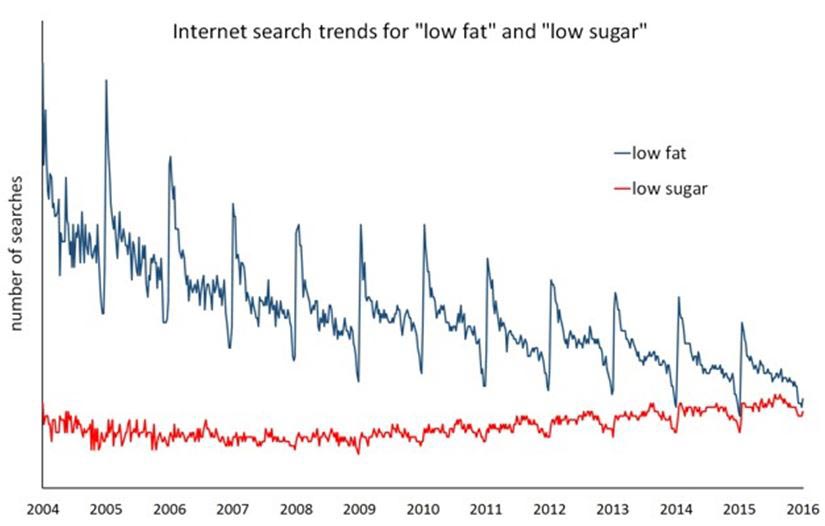
The excess consumption of sugar in the U.S. can be directly traced to flawed dietary guidelines and misplaced agricultural subsidies. Progress is being made however, with the 2015 to 2020 U.S. dietary guidelines9 now recommending limiting your sugar intake to a maximum of 10 percent of your daily calories.10 Google Trends11also reveal that more people are now concerned with low-sugar diets than low-fat diets.
Internet Trend Sugar level
Unfortunately, the dietary guidelines still suggest limiting saturated fat to 10 percent of calories, which is likely far too low for most people. Tragically, it also makes no distinction between healthy saturated fats and decidedly unhealthy trans fats. Saturated fats are actually very important for optimal health, and those with insulin/leptin resistance may need upwards of 50 to 80 percent of their daily calories from healthy fat.
Trans fats, on the other hand, have no redeeming health value, and the evidence suggests there’s no safe limit for trans fats. Besides that glaring flaw, the conundrum with the new guidelines is that both sugar and fat should be limited to 10 percent each of daily calories.
This completely ignores the fact that as you cut out sugar (carbs), you need to replace that lost energy with something else, and that something else is healthy fat, such as that found in avocado, organic seeds and nuts, raw organic buttercheese, and coconut oil, just to name a few.
They do get a number of things right though. In addition to the recommendation to limit sugar, the limits for dietary cholesterol have been removed, giving the thumbs up for eggs and other cholesterol-rich foods. They also note that most Americans need to reduce the amount of red meat consumed.
As I’ve discussed before, the risks of eating too much proteininclude an increased risk for cancer, as it can have a stimulating effect on the mTOR pathway, which plays an important role in many diseases, including cancer.
When you reduce protein to just what your body needs, mTOR remains inhibited, which helps minimize your chances of cancer growth. As a general rule, I recommend limiting your protein to one-half gram of protein per pound of lean body mass, which for most people amounts to 40 to 70 grams of protein a day.

U.S. Government Has Long Encouraged Sugar Consumption

o-SUGAR-DONUT-BITE-facebook
With one food — sugar — causing such pervasive health problems and so much national expense (again, about $1 trillion per year!), U.S. regulators would do well by encouraging lower sugar consumption. Yet they don’t. The new dietary guidelines are one step in the right direction, but to really get to the root of the obesity problem, they also need to rethink sugar and corn subsidies.12
Current farm subsidies bring you high-fructose corn syrup (HFCS), fast food, junk food, corn-fed beef from concentrated animal feeding operations (CAFOs), monoculture, and a host of other contributors to our unhealthy contemporary diet. Both the sugar and corn industry (from which you get high fructose corn syrup) are heavily subsidized by taxpayers. Moreover, as noted by The Washington Post last year:13
“The [sugar] industry used to boast that its government protection does not cost taxpayers anything directly, but that claim has been exploded due to recent market developments that forced the federal government to, in effect, buy up tons and tons of sugar and sell it to ethanol refiners at a loss — so as to prop up prices. Taxpayers took a hit of some $258 million in fiscal 2014.”
Billions of dollars go to corn farmers who have driven down the price of corn so deeply that HFCS is now the number one source of calories in the standard American diet, simply because it’s so cheap. Meanwhile, very few farm subsidies are being doled out to the farmers who grow your produce.
Between 1995 and 2012, the amount gifted to corn growers was $84,427,099,356. Compare this with the amount that went to apple growers: $242,064,005.14 In a 2012 report entitled “Apples to Twinkies,” it was determined that each year your tax dollars (in the form of subsidies) would allow you to buy 19 Twinkies but less than a quarter of one red delicious apple.
There can be little doubt that the U.S. government’s decision to subsidize junk food ingredients rather than real food, such as fresh produce, plays a major role in American’s eating habits, since people will typically eat that which is available and that which they can afford.
At present, most Americans spend upwards of 90 percent of their food budgets on processed foods, which are typically loaded with added sugars/fructose, and offer little in terms of nutritional value. Obesity is a result of such eating habits, and making real food more readily available at lower prices could go a long way toward reversing this trend.

Study: Reducing Sugar Content and Taxing Soda May Greatly Reduce Obesity

girls drinking soda
The suggestion of a soda tax has been flouted for a number of years now, both in the U.S. and Great Britain,15 and elsewhere. The vast majority have failed due to intensive lobbying and local anti-tax campaigns by the sugar industry. It did succeed in one place however. In Mexico, where a 10 percent tax on sugary beverages was enacted as of January 1, 2014, sales of such beverages shrunk by 12 percent in one year.16 As reported by Newsweek,17
“The decline in consumption was greatest amongst those who earned the least, and appears to be going up over time as people’s habits change … Frank Chaloupka, an economist at the University of Illinois at Chicago who wasn’t involved in the study, says that the tax ought to be applied elsewhere, and would improve health by encouraging a lower consumption of sugar.
‘I think sugary beverage taxes should be an important part of a comprehensive approach to promoting healthier diets and reducing obesity,’ he says. ‘The experiences in Mexico are demonstrating their effectiveness in altering consumer behavior, which will almost certainly eventually show up” as a decline in obesity, he adds.'”
Other investigations suggest simply lowering the sugar content of sodas may do the trick. A British study,18 which assessed the potential health benefits of gradually lowering sugar content in beverages over a 5-year period, suggests such a strategy might prevent 1 million cases of obesity over 20 years.
While the impact on any given individual would be quite small, reducing the average person’s calorie consumption by a mere 38 calories a day by the end of the 5th year (equating to a weight lossof just 1.2 pounds), the grand societal effect could still be pronounced.
By reducing people’s weight even slightly, an estimated 274,000 to 309,000 cases of type 2 diabetes could be prevented over the following two decades. Still, when you consider that the sugar and corn industries are fighting to receive the largest subsidies and market share to give you cancer, it would make sense to stop subsidizing sugar and corn before you start taxing sugary products.
Cancer screening is conventionally touted as being an important part of “cancer prevention,” even though it does no such thing. Now, researchers question the validity of public service announcements claiming that “cancer screening saves lives.” According to a recent analysis,19 it’s “unclear” whether screening actually saves lives, and the researchers warn that claiming it does is “misleading.”
As reported by Newsweek:20
“The problem, they say, is that the ubiquitous adage is based on the fact that deaths from the target disease may decline but fails to take into account deaths linked to factors related to the screening itself. Sure, screening for prostate cancer might reduce the incidence of death from that specific disease, but does it reduce overall mortality for the person who got the screening? Maybe not.
For example, prostate cancer screening is known to return ‘numerous’ false positives … and contributes to over 1 million prostate biopsies a year. The procedure is ‘associated with serious harms, including admission to hospital and death.’ What’s more, men diagnosed with prostate cancer are ‘more likely to have a heart attack or commit suicide in the year after diagnosis’ … In both cases, the deaths aren’t due to the cancer itself but rather are linked to the screening.”
The same goes for breast cancer screening and colorectal cancer screening:
  • 60 percent of women who undergo regular mammography screening for 10 years receive a false positive at some point, leading to unnecessary distress and treatment, which can have serious side effects. Studies have also shown that routine mammograms have no effect on death rates.As noted by Reuters:21
“[T]hese tests avert just 1 breast cancer death for every 1,000 women screened. ‘There used to be ads saying if a woman hadn’t had a mammogram, she needed more than her breasts examined,’ Prasad said. ‘The fact that the medical profession promoted screening so strongly, when it was always a balancing act, when it was always a personal choice, is really shameful.'”
    • A study22 looking at colorectal cancer screening found 128 cancer deaths among every 10,000 people who received screening, compared to 192 cancer deaths among every 10,000 individuals who didn’t get screened.
While there were fewer cancer deaths among those screened, this link completely disappeared when they looked at all-cause mortality. When death from all causes was included, there was no meaningful difference between the two groups.

It’s Time to Change the Discussion About Cancer Screening

According to the authors, in order to determine whether cancer screening truly saves lives, “statistically robust studies based on millions of people are needed.” This would be a costly venture, they admit, “but no more so than supporting mass population screening programs with unproven benefits.”
In an accompanying editorial,23 Gerd Gigerenzer, director of the Max Planck Institute for Human Development notes that:
Rather than pouring resources into ‘megatrials’ with a small chance of detecting a minimal overall mortality reduction, at the additional cost of harming large numbers of patients, we should invest in transparent information in the first place. It is time to change communication about cancer screening from dodgy persuasion into something straightforward.”
To do so, she suggests patients should be given pamphlets with fact boxes that clearly present the available data, such as the Risk Literacy fact sheet for mammography below,24 which shows that while mammograms reduce cancer specific mortality in 1 out of 1,000 women, this difference is not reflected in overall mortality.
And, that as many as 10 women out of 1,000 women screened will undergo unnecessary breast removal as a result of a false positive.
Presented with such data, patients would be better able to make a personal decision about whether or not screening in their particular instance might be worth the risk. She also notes that while some may benefit from screening, doctors should not overstate the value of the tests. In an email to Reuters, Gigerenzer says:
“The take-home message is after decades of research we have not found clear evidence that screening saves lives, but clear evidence that screening harms many.”
woman-wondering-whether-to-eat-salad-or-hamburger
Cancer screening is portrayed as the best form of “prevention” you can get against various forms of cancer. But early diagnosis is notthe same as prevention. And cancer screening that does more harm than good can hardly qualify as the best you can hope for … I believe the vast majority of all cancers could be prevented by strictly applying basic, common-sense healthy lifestyle strategies, which includes the following:
Eat REAL food; avoid processed foods and sugars, especially processed fructoseAll forms of sugar are detrimental to health in general and promote cancer. Fructose, however, is clearly one of the most harmful and should be avoided as much as possible.
Reduce non-fiber carbs but have large volumes of fresh organic veggies along with loads of fat from high quality sources such as avocados, raw butter, seeds, nuts, and raw cacao nibs.
Stop eating AT LEAST three hours before going to bedThere is quite compelling evidence showing that when you supply fuel to the mitochondria in your cells at a time when they don’t need it, they will leak a large number of electrons that will liberate reactive oxygen species (free radicals), which damage mitochondrial and eventually nuclear DNA.
There is also evidence to indicate that cancer cells uniformly have damaged mitochondria, so the last thing you want to do is eat before you go to bed. Personally I strive for 6 hours of fasting before bedtime.
Optimize your vitamin DVitamin D influences virtually every cell in your body and is one of nature’s most potent cancer fighters. Vitamin D is actually able to enter cancer cells and trigger apoptosis (cell death).
If you have cancer, your vitamin D level should be between 70 to 100 ng/ml. Vitamin D works synergistically with every cancer treatment I’m aware of, with no adverse effects.
Limit your proteinNewer research has emphasized the importance of the mTOR pathways. When these are active, cancer growth is accelerated.
To quiet this pathway, I believe it may be wise to limit your protein to one gram of protein per kilogram of lean body mass, or roughly a bit less than half a gram of protein per every pound of lean body weight.
That is roughly 40 to 70 grams per day for most. It would be unusual for most to need more than this.
Avoid unfermented soy productsUnfermented soy is high in plant estrogens, or phytoestrogens, also known as isoflavones. In some studies, soy appears to work in concert with human estrogen to increase breast cell proliferation, which increases the chances for mutations and cancerous cells.
Improve your insulin and leptin receptor sensitivityThe best way to do this is by avoiding sugar and grains and restricting non-fiber carbs to to under 100 grams per day. Also making sure you are exercising, especially with high-intensity interval training.
Exercise regularlyOne of the primary reasons exercise works to lower your cancer risk is because it drives your insulin levels down, and controlling your insulin levels is one of the most powerful ways to reduce your cancer risks.
It’s also been suggested that apoptosis (programmed cell death) is triggered by exercise, causing cancer cells to die.
Studies have also found that the number of tumors decrease along with body fat, which may be an additional factor.
This is because exercise helps lower your estrogen levels, which explains why exercise appears to be particularly potent against breast cancer.
Finally, exercise increases mitochondrial biogenesis, which is essential to fight cancer.
Maintain a healthy body weightThis will come naturally when you begin eating right for your nutritional type and exercising. It’s important to lose excess body fat because fat produces estrogen.
Drink a pint to a quart of organic green vegetable juice dailyPlease review my juicing instructions for more detailed information.
Get plenty of high quality animal-based omega-3 fats, such as krill oilOmega-3 deficiency is a common underlying factor for cancer.
Use curcuminThis is the active ingredient in turmeric and in high concentrations can be very useful adjunct in the treatment of cancer.
For example, it has demonstrated major therapeutic potential in preventing breast cancer metastasis.25
It’s important to know that curcumin is generally not absorbed that well, so I’ve provided several absorption tips here.
Avoid drinking alcoholAt minimum, limit your alcoholic drinks to one per day.
Avoid electromagnetic fields as much as possibleEven electric blankets can increase your cancer risk.
Avoid synthetic hormone replacement therapy, especially if you have risk factors for breast cancerBreast cancer is an estrogen-related cancer, and according to a study published in the Journal of the National Cancer Institute, breast cancer rates for women dropped in tandem with decreased use of hormone replacement therapy.
(There are similar risks for younger women who use oral contraceptives. Birth control pills, which are also comprised of synthetic hormones, have been linked to cervical and breast cancers.)
If you are experiencing excessive menopausal symptoms, you may want to consider bioidentical hormone replacement therapy instead, which uses hormones that are molecularly identical to the ones your body produces and do not wreak havoc on your system. This is a much safer alternative.
Avoid BPA, phthalates and other xenoestrogensThese are estrogen-like compounds that have been linked to increased breast cancer risk.
Make sure you’re not iodine deficientThere’s compelling evidence linking iodine deficiency with certain forms of cancer. Dr. David Brownstein,26 author of the book “Iodine: Why You Need it, Why You Can’t Live Without it,” is a proponent of iodine for breast cancer.
It actually has potent anticancer properties and has been shown to cause cell death in breast and thyroid cancer cells.
For more information, I recommend reading Dr. Brownstein’s book. I have been researching iodine for some time ever since I interviewed Dr. Brownstein as I do believe that the bulk of what he states is spot on.
However, I am not convinced that his dosage recommendations are ideal. I believe they are 5 to 6 times higher than optimal.
Avoid charring your meatsCharcoal or flame broiled meat is linked with increased breast cancer risk. Acrylamide — a carcinogen created when starchy foods are baked, roasted or fried — has been found to increase cancer risk as well.


Thanks for taking the time to read this article. If you found this information helpful, please share it with your friends and family. Your support in our endeavor of sharing free information would be much appreciated.

Follow us on Facebook to stay updated with what's going Viral in the Alternative News scene. https://www.facebook.com/ViralAlternativeNews

http://wisemindhealthybody.com