Showing posts with label science. Show all posts

Science in Action: You Can Now Delete Your Unwanted Memories Through Scientific Means [Video]


The American Public Broadcasting Service (PBS) has released a new documentary showing how a group of scientists have been able to manipulate the human mind into creating new memories, and deleting unwanted ones.
PBS is an American public broadcaster and television program distributor. It is independently operated, and is the most prominent provider of television programs to public television stations in America. The film has already been premiered in the United States, and it is expected to be premiered in the United Kingdom in the near future.
In the documentary shown, people can now alter their unpleasant memories so they no longer upset them; or create entirely new memories of events that never occurred in their life.
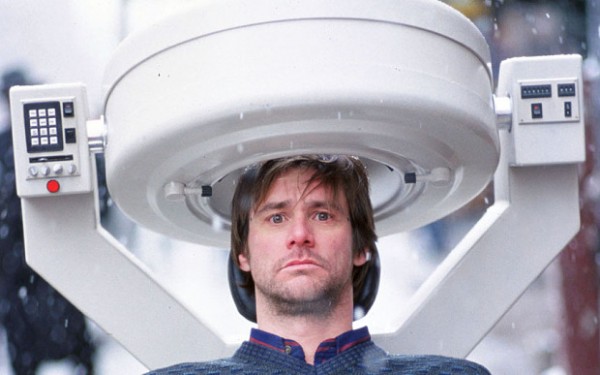
Film-Eternal Sunshine Of the Spotless Mind
The film is titled “Memory Hackers.” According to the Telegraph, Memory Hackers looks at cutting edge research into the nature of memory, and how it may be manipulated for mankind’s benefit.
The filmmakers were quoted as saying “For much of human history, memory has been seen as a tape recorder that faithfully registers information and replays it intact. But now, researchers are discovering that memory is far more malleable, always being written and rewritten, not just by us but by others. We are discovering the precise mechanisms that can explain and even control our memories.”
One of the major characters in the documentary is a 12-year-old boy, Jake Hausler, who is said to have the mind ability to remember every event he has experienced since the age of 8. It is said Jake is the youngest ever person to be diagnosed with Highly Superior Autobiographical Memory. However, this Highly Superior Autobiographical Memory makes it difficult for him to distinguish between trivial and important events from his past.
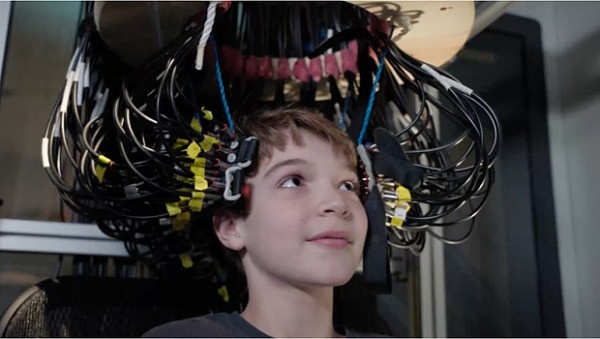
s 1
Psychology professor at London South Bank University, Julia Shaw, who is said to have designed a system for implanting false memories in people, was also a major resource person in the film. Dr. Shaw has successfully convinced subjects in her past research work that they have committed crimes that never took place. However, critics said her research is potentially troubling, having ramifications for the criminal justice system, and should not be encouraged.
Dr. Shaw expressed delight on Twitter about the success of Memory Hackers, thanking the backup crew who helped made the film successful.
The filmmakers also spoke to a clinical psychologist, Merel Kindt, who has discovered that medication can be used to remove the negative associations of some memories. Dr. Kindt is also said to have cured patients of arachnophobia through his research. Arachnophobia is a mental disease associated with the excessive and irrational fear of spiders. It can be triggered by the mere thought of a spider, or even by a picture of a spider.
Despite this breakthrough in the study of the mind, a prominent neuroscientist who is currently working on a technique to erase painful memories, AndrĂ© Fenton, said the human mind is complex, and that researchers are yet to understand a fraction of it. He was quoted by the Telegraph as saying “Forgetting is probably one of the most important things that brains will do. We understand only the tip of the iceberg when it comes to human memory.”
From what we monitored on Social Media about the documentary, people reacted with mixed feelings. Whereas some commended the scientists and the filmmakers, others have said it’s a total waste of time and resources to attempt altering the human mind. These critics believed unscrupulous people; doctors especially, can take advantage of it to perpetrate crimes against innocent people.


Thanks for taking the time to read this article. If you found this information helpful, please share it with your friends and family. Your support in our endeavor of sharing free information would be much appreciated.

Follow us on Facebook to stay updated with what's going Viral in the Alternative News scene. https://www.facebook.com/ViralAlternativeNews

This Article (Science in Action: You can now Delete your Unwanted Memories through Scientific Means [Video]) is a free and open source. You have permission to republish this article under a Creative Commons license with attribution to the author and AnonHQ.com

Science Says People Who Talk To Themselves Are Geniuses


 As it turns out, talking to yourself, is not only sane but it is also a sign of being genius.

Some of the smartest people on earth talk to themselves. Here is just one example.

Albert Einstein talked to himself. – Einstein.org reports that he “used to repeat his sentences to himself softly.

Talking to oneself is often associated with mental illness, especially schizophrenia, but it can also be a very positive and healthy behavior. In an article from Elite Daily, the author, Gigi Engle, discusses about how talking to yourself is a sign of genius.

She says, “The smartest people on earth talk to themselves. Look at the inner monologues of the greatest thinkers. Look at poetry! Look at history!”

Talking to yourself helps in the following ways:

*Talking to yourself makes your brain work more efficiently.
*Talking out loud to yourself helps you only when you know what you need.
*You learn as a child by talking to yourself.
*Talking to yourself helps you organize your thoughts.
*Talking to yourself helps you achieve your goals.

*It helps your self-esteem

Talking to yourself makes your brain work more efficiently

In one study, psychologists Daniel Swigley and Gary Lupyan hypothesized that talking to yourself was actually beneficial.

In one experiment, Swigley and Lupya gave 20 people the name of an object (like a loaf of bread or an apple), which they were told to find in the supermarket. During the first set of trials, the participants were bound to silence. In the second set, they repeated the object’s name out loud as they looked for it in the store.

Test subjects found the object with greater ease when they spoke to themselves while searching. Saying things out loud sparks memory. It solidifies the end game and makes it tangible. But talking out loud to yourself helps you only when you know what you need. In this case, speaking the object’s name out loud is helpful only when you’re familiar with its appearance.

According to Lupyan: Speaking to yourself isn’t always helpful — if you don’t really know what an object looks like, saying its name can have no effect or actually slow you down. If, on the other hand, you know that bananas are yellow and have a particular shape, by saying banana, you’re activating these visual properties in the brain to help you find them.

It boosts memory retention

When you talk out loud, it stimulates more sensory channels than when you subvocalize. You actually hear the sounds and you engage your emotions.

Talking to yourself helps you achieve your goals

Making a list of goals and setting out to achieve them can be hard to do. It can be overwhelming. Talking yourself through those goals is a much steadier way to achieve them. If you walk yourself through the process, each step will seem less difficult and more concise. Things will suddenly seem doable, and you’ll be less apprehensive about diving into the problem.

As Sapadin puts it, “Saying [your goals] out loud focuses your attention, reinforces the message, controls your runaway emotions and screens out distractions.” It puts things in perspective and grounds you.

Talking to yourself means that you are self-reliant. Like Albert Einstein, who ”was highly gifted and acquired early in his life the ability to exploit his talents,” people who talk to themselves are highly proficient and count on only themselves to figure out what they need.

It motivates you

Especially if you use “you” instead of “I.” Self-talk has been found to be even more effective if you use second person. Saying, “You can do it” works better than saying, “I can do it.” Dr. Sanda Dolcos, a researcher at the University of Illinois at Urbana-Champaign says, “Self-advice expressed using ‘You’ probably enables people to adopt a broader perspective.”


Thanks for taking the time to read this article. If you found this information helpful, please share it with your friends and family. Your support in our endeavor of sharing free information would be much appreciated.

Follow us on Facebook to stay updated with what's going Viral in the Alternative News scene. https://www.facebook.com/ViralAlternativeNews


By The Open Mind

Innovative ‘Design Of The Year’ Will Replace Animals In Lab Tests


Bio-inspired micro-devices could potentially replace animal testing and bring new therapies to patients faster and at lower cost in the future


The Design Museum in London has chosen its Best Design of the Year: a chip that replaces animal test subjects with a complex package of human cells. This radical invention has the potential to eliminate animal experimentation, and in effect save millions of species’ lives worldwide.

The lung-on-a-chip, called so because that’s what it actually is, was designed at Harvard’s Wyss Institute for Biologically Inspired Engineering. It may look simple, but the chip contains complex human cells arranged similarly to the way a lung works. In fact, it even breathes like a human does!

Scientists at the Wyss explained the far-reaching potential of these chips. For example, they can use the lung-on-a-chip to introduce bacteria to the channels to mimic and infection, or introduce the chemicals one breathes in regularly to mimic air pollution and test its effect on the lungs. Or, they can even test new medications and determine the effects they’ll have on human physiology.

But not only that, the ‘Design of the Year’ can ultimately end the cruel practice of animal testing while offering a more accurate testing method.

“Bio-inspired micro-devices that mimic whole human organs, such as the lung on a chip, could potentially replace animal testing and bring new therapies to patients faster and at lower cost in the future,” the design team explains in their video (below).

The ultimate goal of the Wyss scientists is to build ten different organs and link them to create a whole body (how incredible!).


Below is the video detailing how the chip mimics a human lung:


Thanks for taking the time to read this article. If you found this information helpful, please share it with your friends and family. Your support in our endeavor of sharing free information would be much appreciated.

Follow us on Facebook to stay updated with what's going Viral in the Alternative News scene. https://www.facebook.com/ViralAlternativeNews

This article (Innovative ‘Design Of The Year’ Will Replace Animals In Labs) is free and open source. You have permission to republish this article under a Creative Commons license with attribution to the author and TrueActivist.com.

Watch How Ayahuasca Resets The Brain To Allow For Healing

Image Credit: Wikimedia
Ayahuasca is considered by many to be in a class of its own regarding psychedelics. Known as a sacred teacher plant it allows users to experience the world from a vastly new perspective and is used to also heal various unhealthy addictions, including heavy drug addictions.

Ayahuasca has a very profound impact on the brain. Below you can watch a short video to give you some more insight;


Thanks for taking the time to read this article. If you found this information helpful, please share it with your friends and family. Your support in our endeavor of sharing free information would be much appreciated.
Follow us on Facebook to stay updated with what's going Viral in the Alternative News scene. https://www.facebook.com/ViralAlternativeNews