Showing posts with label Roundup. Show all posts

Disturbing: Cancer-Linked Weed Killer Found In Popular German Beers


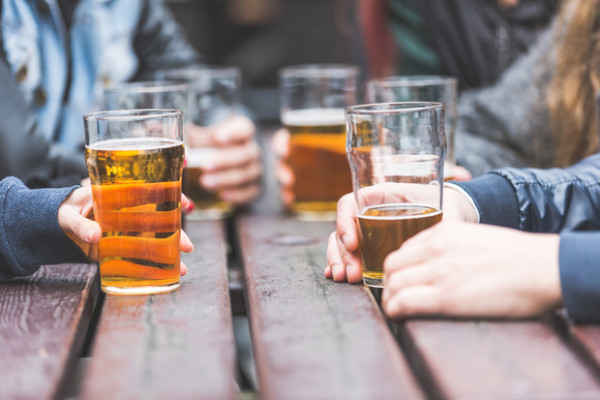
A recent study in Germany has revealed that popular beers in the country contain traces of glyphosate, the world’s most widely used weed killer. The study was conducted by the Munich-based Environmental Institute (MEI). The German International Broadcaster-Deutsche Welle reports that the study casts doubt on Germany’s envious beer purity law.
According to Reuters, Germany is the leading producer of beer in the whole of Europe. The country is home to more than 1,300 breweries which produce about 5,000 different beers.
German food experts say the country’s food safety law known as Reinheitsgebot requires brewers of beer to produce beer using only malt, hops, yeast and water. Reinheitsgebot is said to be celebrating its 500th anniversary this year, and it is said this new study seems to be denting the image of the body.
s 2
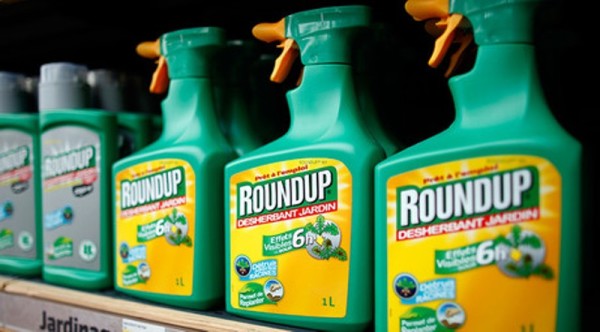
MEI said the highest glyphosate level in one beer studied, was dangerous; urging Reinheitsgebot to take immediate steps to save the situation. The institute recommended that beer be brewed from water, malt and hops. In total, 14 top-brand beers were studied, and traces of glyphosate were present in all of them. Glyphosate is used as a weed killer around the world. It is mostly marketed by the United States agriculture giant, Monsanto, with the brand name Roundup.
The World Health Organization’s (WHO) cancer research committee has included glyphosate in the list of cancer causing agents. Some organizations, including the European Union has tried not to accept the WHO’s findings, but various studies point to the fact that glyphosate is dangerous to the human health.
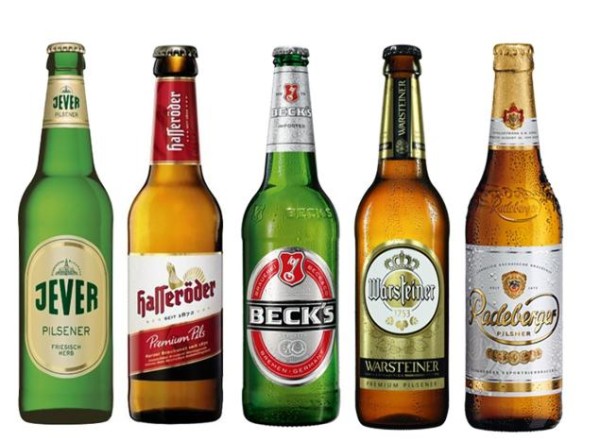
Citing its laboratory study of the 14 most popular beers, MEI said it found glyphosate readings between 0.46 and 29.74 micrograms per liter. Hasseroeder, a beer brewed in Saxony-Anhalt in eastern Germany and owned by Anheuser Busch Inbev, is said to contain the highest trace of glyphosate at 29.74 micrograms per liter. The smallest amount, 0.46 micrograms per liter was found in Augustiner, a beer brewed in Munich.
The study said the highest reading was 300 times the legal limit of glyphosate allowed in drinking water in Germany. MEI said the result of the study was alarming, considering the fact that glyphosate had been ranked as carcinogenic. The institute also accused brewers of not adequately monitoring raw ingredients used in brewing the beers.
s 4
Since the study was made public, the beer companies have defended their products. The company whose beer was found to contain the highest level of the glyphosate – Anheuser Busch Inbev – said the institute’s findings were “not plausible,” referring to a bill of health issued by the German Federal Institute for Risk Assessment (BFR), that stated the amounts of glyphosate found in beer did not pose a threat to consumers.
Anheuser-Busch Inbev also said it is questioning the scientific integrity of the study due to the small number of samples. It stated categorically that it is rejecting the MEI’s allegation that brewers were not adequately monitoring raw ingredients.  Anheuser-Busch Inbev said that is absurd and completely unfounded.
The Brauer-Bund beer association also added that the institute’s findings were based on a small number of samples, and that the study was not credible.
s 3
To further make matters worse, the German government seems to be rubbishing the study. Answering questions regarding the disturbing revelation by MEI on ARD television, the German Agriculture Minister, Christian Schmidt said he was not familiar with details in the study. He also referred to the BFR study, which downplays the risk level of the presence of the chemical in any product.
As the government seems to be downplaying the study, some German citizens have expressed worry on social media. They said the study has left them confused, and it is difficult whether to believe in the study,or what the government is saying.


Thanks for taking the time to read this article. If you found this information helpful, please share it with your friends and family. Your support in our endeavor of sharing free information would be much appreciated.

Follow us on Facebook to stay updated with what's going Viral in the Alternative News scene. https://www.facebook.com/ViralAlternativeNews

This article (Disturbing: Cancer-Linked Weed Killer Found in Popular German Beers) is a free and open source. You have permission to republish this article under a Creative Commons license with attribution to the author and AnonHQ.com.

Monsanto’s Weed-Killer Officially Most Heavily Used In Global History Of Chemical Agriculture


Monsanto’s best-selling herbicide is officially the most used weed-killer in the global history of chemical agriculture, according to a poignant paper published this week by the journal, Environmental Sciences Europe. 
The author of the landmark paper, Charles Benbrook, PhD, emphasizes “The dramatic and rapid growth in overall use of glyphosate will likely contribute to a host of adverse environmental and public health consequences“. Dr. Benbrook also makes the connection between glyphosate exposure and many serious health effects, including liver and kidney diseases, as well as non-Hodgkin lymphoma.
“My hope is that this paper will stimulate more research on glyphosate use, and human and environmental exposure patterns, to increase the chance that scientists will quickly detect any problems that might be triggered, or made worse by glyphosate exposure,” Benbrook notes.
The paper details that nearly 19 billion pounds (8.6 billion kilograms) of glyphosate have been used world wide since the introduction of “Roundup Ready” GMO crops in the mid-90s. In 2014 alone, enough glyphosate was sprayed to cover three-quarters of every harvested acre of cropland in the U.S. Most shocking, 74% of all glyphosate ever sprayed has been done so in the last decade as the amount of genetically engineered crops have grown exponentially across the globe.
It is now made generically and used in numerous products, not only Roundup.
“This report makes it clear that the use of glyphosate combined with the dominance of genetically engineered crops has produced an looming public health threat both in the U.S. and around the world. Farmers have sprayed billions of pounds of a chemical now considered a probable human carcinogen over the past decade. Spraying has increased to multiple times a year recently on the majority of U.S. cropland. The sheer volume of use of this toxic weed-killer is a clear indication that this chemical dependency is a case of farming gone wrong,” Mary Ellen Kustin, a top-ranking policy analyst for the Environmental Working Group, stated in response to Dr. Benbrook’s research.
Kustin’s comments reflect the World Health Organization’s March 2015 declaration that glyphosate ‘probably’ causes cancer. The assessment was reached by the opinion of 17 experts from 11 different countries, who convened last spring to review the carcinogenicity of glyphosate among other organophosphate pesticides.
(Monsanto promptly accused the agency of having an “agenda” and “cherry picking” the damning research.)
To read Dr. Benbrook’s paper in its entirety, please visit the Environmental Working Group here.
Monsanto-Killing-Machine


Thanks for taking the time to read this article. If you found this information helpful, please share it with your friends and family. Your support in our endeavor of sharing free information would be much appreciated.

Follow us on Facebook to stay updated with what's going Viral in the Alternative News scene. https://www.facebook.com/ViralAlternativeNews

http://www.march-against-monsanto.com

Source: ewg.com
Source: nytimes.com
Source: sustainablepulse.com

Beware: Roundup Attacks Your Core Cellular Functions


By Dr. Mercola
In the featured video, Jeffrey Smith interviews Dr. Alex Vasquez, M.D., Ph.D., author of about 100 papers and 15 scientific books, and Stephanie Seneff, Ph.D., a Senior Research Scientist at MIT and author of about 200 papers, about the impact of glyphosate — the active ingredient in Roundup — on your mitochondria.
As noted by Jeffrey, this is a very important topic, as mitochondrial dysfunction is an underlying foundational element of most diseases. 

Why the Health of Your Mitochondria Matters

As explained by Vasquez, in addition to producing most of your body’s energy in the form of ATP, your mitochondria also participate in many other processes, such as cellular signaling.
According to Vasquez, the data is “impressively clear” that those with type 2 diabetes, metabolic syndrome and high blood pressure have dysfunctional mitochondria.
Your mitochondria also play an important role in inflammation, and control apoptosis (cell death). These two roles make your mitochondria a player in diseases such as cancer, for example, as damaged cells fail to receive the message to self-destruct, and therefore continue their malignant growth. 
Vasquez — who is an expert on inflammation — divides inflammation into three different forms, which exist on a continuum and overlap each other:
  1. Metabolic inflammation (conditions such as hypertension and diabetes)
  2. Allergic inflammation 
  3. Autoimmune inflammation 
Chronic, low-level inflammation, which tends to underlie most chronic health conditions, he describes as “metabolic disturbance with cellular injury.” While mitochondrial dysfunction is involved in virtually ALL disease, the following bears mentioning, as they’re among the most common:
Cancer  Heart disease Seizure Disorders
Asthma and allergiesAutoimmune diseasesObesity
Alzheimer’s Parkinson’sDepression
Chronic fatigue syndromeFibromyalgiaAutism 
Type 2 diabetesMetabolic syndromeHypertension

How Glyphosate Damages Your Mitochondria

So how does glyphosate affect your mitochondria? Seneff speaks to this issue, noting that manganese appears to be involved. Glyphosate chelates manganese (plus many other minerals), which makes the plants deficient. In turn the animals or humans who eat the plants do not get enough either. 
It’s worth explaining the chelation process a bit further. As Smith notes, glyphosate binds very strongly to micro minerals, and doesn’t let them go. 
So even if there’s manganese in the plant you eat, your body cannot access and use it, because the glyphosate molecule holds it trapped within itself. Likewise the plant is prevented from taking up the mineral, even if it’s in the soil.
Your mitochondria require manganese to break down superoxide dismutase (SOD) and turn it into hydrogen peroxide, which is far less toxic, and eventually water. This is a very important process, as it protects your mitochondria from oxidative damage. Without manganese, this protection is lost.

Roundup Formulation Also Interferes With Energy Production

Roundup has also been found to interfere with ATP production by affecting your mitochondrial membranes. In this case, it’s actually the so-called “inert” solvents in Roundup that pose the greatest threat. 
However, when you add the solvents and glyphosate together, the solvent makes the membrane more permeable, allowing the glyphosate to enter. Without the solvent, the damage may not be as great.
It’s worth repeating what Vasquez notes, which is that the research data is overwhelmingly consistent and clear on all of these points. 
So the fact that there is even public debate about whether glyphosate or Roundup causes mitochondrial harm (and therefore harms health) means that people simply are not aware of the scientific literature. 
Because from that perspective, there’s nothing to debate. According to both Seneff and Vasquez, the scientific literature is abundant, easily attainable online, clear, and very consistent. 
If you don’t know where to start, here’s a review of some of the published research questioning the safety of glyphosate in terms of its effects on human and animal health, compiled by Alex Vasquez (containing 220 pages worth of research).
Another illuminating and heavily referenced 80-page report is "Banishing Glyphosate," authored by Eva Sirinathsinghji, Ph.D. and Mae-Wan Ho, Ph.D. with cooperation from six other researchers, including Don Huber and Nancy Swanson. 
“Why are we having a public debate on this when the data is so clear?,” Vasquez asks. A good question indeed, and the answer is that the industry has done a great job of confusing and misleading people about the actual content and strength of the available science. 

Court Finds Fraud and Defamation Was Used to Discredit GMO Study

The case of Gilles-Eric Séralini is a perfect example of how the chemical technology industry tries to keep you in the dark — by whatever means necessary, moral, legal or not. His first-ever lifetime feeding study published in 2012 revealed numerous shocking problems in rats fed GMO corn, including massive tumors and early death. 
Rats given glyphosate in their drinking water also developed tumors. The following year, the publisher retracted the studysaying it “did not meet scientific standards,” even though a long and careful investigation found no errors or misrepresentation of data. 
Interestingly enough, in the time between the publication of the study and its retraction, the journal had created a new position — Associate Editor for Biotechnology; a position that was filled by a former Monsanto employee. 
Séralini not only republished the study in another journal, he also took legal action, and at the end of last year, he won two court cases against some of those who tried to destroy his career and reputation. In the first case, Marianne magazine and a journalist by the name of Jean-Claude Jaillette — who accused Séralini of “scientific fraud in which the methodology served to reinforce pre-determined results” — were found guilty of public defamation. 
In a second case, Marc Fellous, former chairman of the Biomolecular Engineering Commission of France, was indicted for forgery and the use of forgery in a libel trial. 
According to Séralini’s Website:1
“The Biomolecular Engineering Commission has authorized many GM crops for consumption. The details of the case have not yet been publicly released but a source close to the case told GMWatch that Fellous had used or copied the signature of a scientist without his agreement to argue that Séralini and his co-researchers were wrong in their reassessment of Monsanto studies.”
Recent follow-up research2,3 by Séralini shows that long-term exposure to even ultra-low amounts of Roundup may cause tumors, along with liver and kidney damage in rats. In this study, the dose used was "environmentally relevant in terms of human, domesticated animals and wildlife levels of exposure," prompting the authors to suggest Roundup may have significant health implications.

Concerns Over Glyphosate Have Turned Out to Be Valid

In recent years, concerns over the health effects of glyphosate have become quite pronounced, and last year the International Agency for Research on Cancer (IARC), a division of the World Health Organization (WHO), reclassified  glyphosate as a Class 2A “probable carcinogen.”4, 5,6  
Monsanto recently filed a lawsuit against California’s Office of Environmental Health Hazard Assessment to keep glyphosate from being added to its list of known carcinogens,7 which require products to carry a special cancer warning.
Other research8,9,10,11 suggests the Roundup formulation boosts antibiotic resistance by turning on a specific set of genes in the bacterium. This primes it to become more readily resistant to antibiotics. Despite these and other concerns, the U.S. Department of Agriculture (USDA) does not test foods for glyphosate residues, as the chemical was assumed safe. 
The chemical also wasn’t supposed to accumulate in the human body, but this too has been shown to be a false assumption.12

When Will USDA Test Food for Glyphosate Residues?

Last summer the U.S. Environmental Protection Agency (EPA) announced U.S. regulators may start testing for glyphosate residues on food in the near future.13,14,15 However, the latest annual pesticide residue report still did not include glyphosate. Even if they did, current allowable limits may be set too far high to protect your health, so unless that’s revised as well, you may be lulled into a false sense of security. The EPA actually raised the allowable limits for glyphosate in food in 2013. 
Limits for root and tuber vegetables (with the exception of sugar) were raised from 0.2 parts per million (ppm) to 6.0 ppm. Meanwhile, researchers have documented malformations in frog and chicken embryos starting at 2.03 ppm of glyphosate.16
The allowable limit in oilseed crops (except for canola and soy) was raised to 40 ppm, which is 100,000 times the amount needed to induce cancer in breast cells.17 To address the lack of testing, the Organic Consumers Association (OCA) joined forces with the Feed the World Project last year, launching the world’s first glyphosate testing of urine, water, and breast milk for the general public.18,19,20,21

Roundup Ready Alfalfa Goes Wild — As Predicted

In related news, a recent USDA study22 shows that genetically engineered (GE) alfalfa — approved in late 2011 — has already gone wild, and is quickly spreading across the Western states. At the time of its approval, conventional alfalfa farmers were concerned that their conventional alfalfa would be contaminated through cross-pollination. Now their fears have turned into reality, and contamination has already cost them millions of dollars in lost revenue. 
As noted by Eco Watch,23 the wild spread “exposes the failure of USDA’s "coexistence’ policy for GE and traditional crops.” There was never any doubt in my and many other people’s mind that this would happen, yet “I told you so” just doesn’t bring any satisfaction. When will our government let facts and common sense speak for themselves? Eco Watch also reports that:
“[T]he researchers also found clear evidence that the Roundup Ready gene was being spread by bees, which are known to cross-pollinate alfalfa populations separated by up to several miles. Their results suggested that ‘transgenic plants could spread transgenes to neighboring feral plants and potentially to neighboring non-GE fields.’ 
While they did not test this latter possibility, there is no doubt that non-GE alfalfa has in fact been transgenically contaminated — not just once, but on many occasions.”

Campbell’s Decimates Monsanto's Argument Against Labeling

The fact that GE crops are heavily contaminated with Roundup is just one of many reasons to become aware of which foods contain GMOs and which don’t. Remember, Roundup Ready crops are designed to withstand the pesticide, and tolerance has forced farmers to increase the amount of pesticide sprayed on the crop. For this and other reasons, we need GE foods to be clearly labeled.
The Grocery Manufacturers Association (GMA), of which Monsanto is a member, insists mandatory GMO labeling would result in higher food prices. It’s completely illogical, yet many have fallen for this stupid ruse. Now, Campbell Soup’s decision to voluntarily label their GMO products will finally decimate this argument and prove that added cost is a non-issue. As reported by Alternet24 on January 15: 
“[T]he first question we asked ... was, will you charge more for these products after you label them? In an email ... company spokesman Tom Hushen wrote, ‘To be clear, there will be no price increase as a result of Vermont or national GMO labeling for Campbell products.’
Will Campbell’s have to absorb extra costs associated with labeling? Will profit margins on its GMO brands shrink? No, says Carmen Bain, a sociology professor at Iowa State University who studies GMO labeling. Bain told PoliticoPro’s Jenny Hopkinson, ‘Campbell has determined that the cost of labeling their products is negligible (and therefore won't mean higher costs for consumers) and that it's probably costlier for them not to get out in front of this thing.’”

What You Need to Know About GMOs

Genetically modified organisms (GMOs) are live organisms whose genetic components have been artificially manipulated in a laboratory setting through creating unstable combinations of plant, animal, bacteria, and even viral genes that do not occur in nature or through traditional crossbreeding methods.
GMO proponents claim that genetic engineering is “safe and beneficial,” and that it advances the agricultural industry. They also say that GMOs help ensure the global food supply and sustainability. But is there any truth to these claims? I believe not. For years, I've stated the belief that GMOs pose one of the greatest threats to life on the planet. Genetic engineering is NOT the safe and beneficial technology that it is touted to be.
The FDA cleared the way for GE (Genetically Engineered) Atlantic salmon to be farmed for human consumption. Thanks to added language in the federal spending bill, the product will require special labelling so at least consumers will have the ability to identify the GE salmon in stores. However, it’s imperative ALL GE foods be labeled, which is currently still being denied.

The FDA is threatening the existence of our food supply. We have to start taking action now. I urge you to share this article with friends and family. If we act together, we can make a difference and put an end to the absurdity. 

QR Codes Are NOT an Adequate Substitute for Package Labels

The biotech industry is trying to push the QR code as an answer for consumer concerns about GE foods. QR stands for Quick Response, and the code can be scanned and read by smart phones and other QR readers.
The code brings you to a product website that provides further details about the product. The video below shows you why this is not an ideal solution. There’s nothing forcing companies to declare GMOs on their website. On the contrary, GE foods are allowed to be promoted as “natural,” which further adds to the confusion.

These so-called "Smart Labels" hardly improve access to information. Instead, by making finding the truth time consuming and cumbersome, food makers can be assured that most Americans will remain ignorant about the presence of GMOs in their products. Besides, everyone has a right to know what's in the food. You shouldn't have to own a smartphone to obtain this information.

Non-GMO Food Resources by Country

If you are searching for non-GMO foods here is a list of trusted sites you can visit.


Thanks for taking the time to read this article. If you found this information helpful, please share it with your friends and family. Your support in our endeavor of sharing free information would be much appreciated.

Follow us on Facebook to stay updated with what's going Viral in the Alternative News scene. https://www.facebook.com/ViralAlternativeNews

http://articles.mercola.com